Private Miami Boat Charter: Sightseeing, Sunset & Sandbar (opens in a new tab)
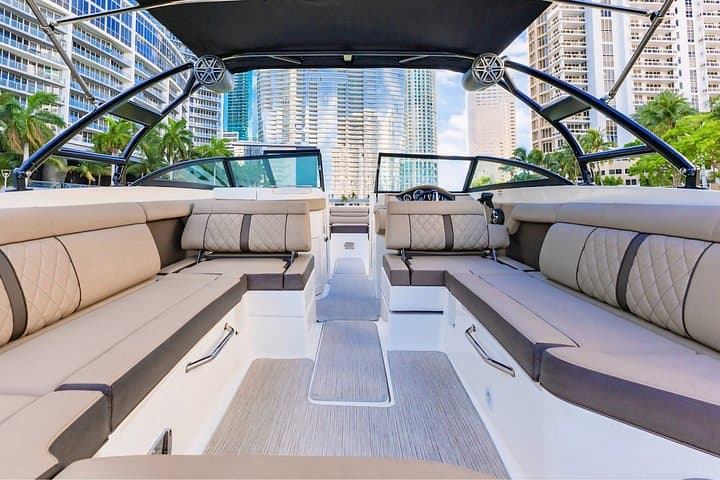
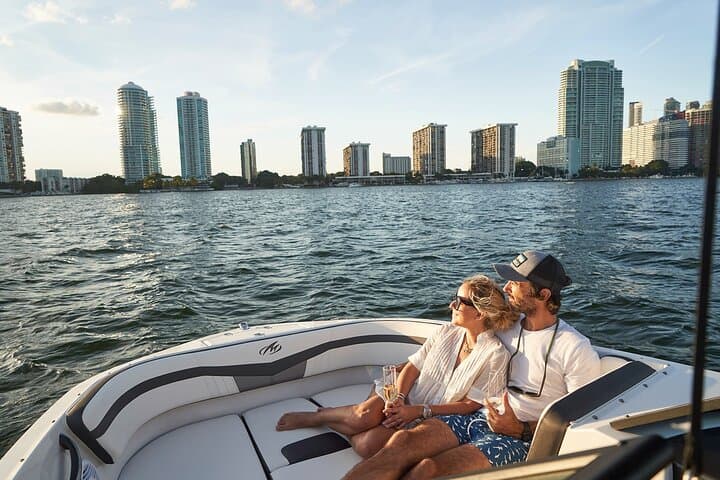
Experience Miami the way it’s meant to be seen—on your own private boat, with the flexibility to make the day exactly what you want. With…
2 hours
Prices checked
Beach update
Floating brown weed, mostly spring into summer, impossible to forecast precisely. It smells, it is harmless, and it affects a quiet beach far more than a busy one.

Sargassum is a free-floating brown seaweed that drifts across the tropical Atlantic and reaches southeast Florida shorelines mainly from spring into summer, carried north along the coast by the Gulf Stream. Some years it barely registers. Others it arrives in record volumes, and researchers at the University of South Florida, who monitor the belt from satellite imagery, have measured basin-wide totals that broke records within the last few seasons.
The important caveat comes from the researchers themselves: because its movement is complex and its growth and decay depend on temperature, the specific timing of a landing on a specific beach cannot be forecast. Monitoring gives you the size and broad position of the belt, not a date for your stretch of sand.
Fresh sargassum in the water is unpleasant to swim through and completely harmless. On the sand it is the same — until it begins to decompose, at which point it produces a sulphurous smell that carries a long way, and it can attract flies. It is also genuine marine habitat, which is why it is not simply bulldozed everywhere.
Busy beaches are cleared; quiet ones often are not. The main lifeguarded stretches on Miami Beach are maintained by crews, so a heavy landing is usually gone within a day or two. A quieter beach is likely to be left as it is, which is better for the ecosystem and worse for sunbathing.
Check before you commit to a beach day in late spring and summer — a look at a live beach camera or a recent photograph tells you more than any forecast.
It affects the sand, not the boat. Bay cruises, jet skis and offshore trips are essentially unaffected, and the bay side of the island sees far less of it than the ocean side.
It is not a reason to avoid the season. Summer is the warmest, clearest water of the year here, and even in a heavy year the weed comes and goes in pulses rather than sitting there for four months.
SourcingSeasonality, the Gulf Stream transport route, the record basin-wide measurements and the explicit limitation that beaching cannot be precisely forecast are summarised from the University of South Florida Optical Oceanography Laboratory's sargassum monitoring and its public bulletins. No forecast for any specific beach or date is made here.
Plan around it
The pages that carry the practical detail behind this story — hours, costs, access and where it sits on Miami.
Things to do
Water activities in Miami: why boats go before noon, the bay against the ocean against the reef, which marina to turn up at, and Florida's…
Things to do
Outdoor activities in Miami, planned around heat: the two usable windows each day, where the shade actually is, and the beach rules that…
Things to do
The best time to visit Miami, read as a planning problem: the storm hour, booking lead times, three weeks to avoid, and how far the…
Things to do
Things to do in Miami with kids, planned by the clock: an early start, short legs, the two o'clock indoor reset, calm water, and what to…
Related
This story touches something you can book. These are live listings from our booking partner, not a recommendation attached to the report above.
Some links below go to Viator, our booking partner. We earn a commission on bookings made through them — at no extra cost to you, and with no influence on what we recommend.
Who reported this
Activities Editor
Marcus covers everything you can book: boats, airboats, jet skis, bikes, tram tours, the lot. He knows which Everglades trips run west of the park boundary rather than inside it, why anything with a hull should leave before noon between June and October, and which listings are one tour sold under four names.
Our newsroom is machine-assisted and human-edited: stories are drafted from verified public sources and checked before they publish. How that works is set out in our editorial standards.