Skip to content
Search
Menu

We earn a commission if you book through this link. You pay the same price.

Everything

Air Conditioning With a Point to It

Last updated

Indoor activities in Miami for the hours the heat index wins: the city's one real indoor cluster, what to buy per cool hour, and what is not indoors at all.

A visitor standing in a gallery looking at paintings hung on a white wallUnsplash

Most articles file Miami's indoor options under rain. That is the wrong filing. It rains here in short violent bursts for about forty minutes of a summer afternoon, and even then only on some afternoons. The heat is not occasional. From June through September the index passes a hundred degrees on most days by early afternoon and stays there, and it does that whether the sky is clear or not.

So the real function of an indoor hour in Miami is thermal. It is the block you put between roughly eleven and four in high summer so that the rest of the day survives — so that a walking morning does not end with everybody exhausted at one o'clock, and so that there is something left of the group by the time the light turns at six and the city becomes pleasant again. Treated that way, air conditioning is not a fallback. It is the thing that makes the outdoor parts of the day possible.

Two facts shape everything below. The first is that Miami is thin on large indoor attractions for a city its size, and pretending otherwise helps nobody. This is a place built around being outdoors; there is no enormous museum quarter and no chain of sheltered arcades. A full grey winter day indoors here takes real planning, and it takes you to two or three specific places rather than twenty.

The second is that the distance between indoor hours is the whole problem. A ninety-minute museum followed by a twenty-minute walk in direct sun to the next one is not an indoor afternoon; it is a hot afternoon with two cool interruptions. Which is why one location matters more than all the others: the downtown museum park, where two substantial institutions sit a few hundred metres apart and a fare-free, covered, air-conditioned elevated train delivers you to both. Nowhere else in the city lets you chain cool hours without going back out into the afternoon.

And there is a category of mistake worth naming before you make it. Several of the places people reach for when they want to be indoors in Miami are not indoors. The famous mural courtyard in Wynwood is an open-air enclosure. Lincoln Road is an open-air street. Brickell City Centre is shaded by an engineered canopy but is not a sealed mall. The bayfront villa in Coconut Grove is half garden. All of them are good; none of them is air conditioning.

What follows is organised by how long your indoor block needs to be, and by what each ticket buys per cool hour.

Indoors here is a thermometer decision

When to go

The hour you go indoors should be set by the month, not by the forecast.

MonthsWhen the indoor block belongsHow long it needs to be
June to SeptemberRoughly 11am to 4pmTwo to three hours, and it is not optional with children
May and OctoberRoughly 1pm to 4pmNinety minutes, mostly to cover the storm window
March and AprilRoughly 2pm to 4pmAn hour, or nothing at all
November to FebruaryUsually not neededOnly when a cold front parks over the city

The reason this is a schedule rather than a preference is that heat injury here is cumulative and quiet. The index, not the temperature, does the work — the humidity means sweat stops evaporating, and a four-hour walking block that starts at eleven in July ends badly at hour two regardless of how fit anybody is. Children and anyone over about seventy feel it first and complain last.

The corollary is the useful part. If you take the middle of the day indoors, you get the two best outdoor windows in this city almost for free: before ten in the morning, when the light is low and the bay is flat, and after five, when the heat breaks and the streets fill with people who live here. A Miami day with an indoor middle is a longer day than a Miami day without one.

In December and January you can largely ignore all of this and walk from breakfast to dinner, which is the real reason winter is high season.

By how long the block needs to be

Local tips

Twenty minutes. A Metromover loop. Free, covered, air-conditioned, elevated one storey above the street with the Brickell leg crossing the Miami River. Ride it as long as you like. This is the cheapest cooling in the city and the only one with a view.

One hour. A single gallery. Wynwood's are free to enter and clustered within a few blocks, and the Design District's contemporary art museum is free permanently, which makes it the best-value cool hour in Miami on any date. A cinema works too, and is unglamorous advice that saves plenty of August afternoons.

Two hours. The downtown art museum, at around $16 for an adult and free to everyone on the second Saturday of the month. Its bayside terrace and hanging gardens are outdoors, so budget the indoor portion honestly.

Three to four hours. The science museum and planetarium next door, around $30, with an aquarium inside it. This is the single strongest indoor block in the city with children, and it is the one to buy for two o'clock rather than eleven, because the morning was always going to be fine outdoors.

A full day. Chain the two downtown institutions with a long lunch between them, or accept a drive to one of the enclosed malls at the county's edges. There is no third answer, and any page that offers you one is padding.

Whatever the length: check the institution's closing day. Several museums here take one early in the week and it varies by place, so confirm the specific one rather than a general list.

What a ticket buys, judged per cool hour

What it costs

An unusual way to look at admission, and the right one when what you are actually buying is time out of the sun. Bands only; verify before you rely on them.

OptionRough costCool hoursPer hour
Metromover loopsFreeAs many as you like$0
Design District contemporary art museumFree, permanently1 to 1.5$0
Wynwood galleriesFree to enter1 to 2$0
Downtown art museumaround $161.5 to 2roughly $8–10
Downtown art museum on a second SaturdayFree1.5 to 2$0
Science museum, aquarium and planetariumaround $303 to 4roughly $8–10
Cinemaaround $152roughly $7
A long lunch somewhere air-conditioned$25 upwards1.5it depends what you ate

Two readings. First, the free options are not the weak ones here: a Metromover loop and a free contemporary art museum are among the best cool hours available at any price. Second, the science museum is the best paid value in the city on this measure and the only single ticket that reliably fills a whole hot afternoon — which is why it is the default answer with children and a poor answer for two adults who wanted art.

The second Saturday is worth repeating because it changes the arithmetic entirely: on that date the downtown art museum drops to zero, and it is a short covered ride from the science museum.

Indoors with children, which is a different problem

Local tips

With children, the indoor block is not a rescue. It is the load-bearing part of the day, and it should be booked before you leave the hotel rather than chosen at half past one when everybody has stopped talking to each other.

  • Buy it for the afternoon, not the morning. The morning is the good outdoor window. Spending it indoors and then attempting a beach at two o'clock in July inverts the day.
  • Pick the one with the most inside it. An aquarium, a planetarium show and three floors beats a single gallery, because the thing that fails is attention rather than time.
  • Sit down somewhere air-conditioned for lunch. A counter under an awning is a great adult solution and a poor one at age six.
  • Check the closing day. Several museums here close early in the week and the day varies by institution. Arriving at a locked door with hot children is the worst twenty minutes of a trip.
  • The Metromover is a free attraction in its own right at that age. It is driverless, glass-fronted, elevated and runs in loops, which means you can ride it with no destination and no ticket, and it is genuinely interesting from a child's eye height.
  • Plan the exit. Come out at five, not at three. The evening is when a Miami day with children actually works — the sand cools, the light is good, and everyone is civil again.

Winter, when you mostly do not need this page

From about December to March, the reason to be indoors here largely disappears. Highs sit in the seventies, the humidity drops, the wet season is over, and you can walk from breakfast to dinner without the heat deciding when you stop. That, rather than the water temperature, is why winter is the expensive season.

There is one exception worth planning for. A cold front two or three times a season brings grey skies, steady drizzle and air cool enough to want a jacket, with highs dropping into the 60s and occasionally lower. That is a genuine all-day indoor event rather than a forty-minute interruption, and it is the one time Miami's thinness on large indoor attractions is a real limitation. If it happens to you, chain the two downtown institutions, add the free contemporary art museum in the Design District, and accept that the third act of the day is a long lunch.

Two smaller winter notes. Early December brings Art Basel, when the city's galleries and temporary exhibition spaces are at their fullest and most interesting, and when everything costs more and is harder to get into. And museums are busiest here in the dry season generally, so the second-Saturday free day at the downtown art museum is considerably more crowded in January than in August — arrive at opening rather than at lunchtime.

The rest of winter, the honest advice is to put this page away and be outside.

Book it

What you can book

We could not find tours matching this right now

Nothing came back for Frost Science Museum admission. Operators add and retire experiences constantly, so this list changes week to week. Try a broader category, or come back in a day or two.

The city's one genuine indoor cluster

How they compare

Chaining indoor hours requires two things close together and a covered way between them. In Miami, that exists properly in exactly one place.

WhereWhat you can chainThe walk betweenHonest verdict
The downtown museum parkAn art museum and a science museum with an aquarium and planetarium, a few hundred metres apart, both on the fare-free MetromoverShort, and the Metromover itself is covered and air-conditionedThe only true indoor cluster in the city. Three to five cool hours without a hot walk
The Design DistrictA permanently free contemporary art museum, galleries, retailOutdoors, between courtyards, in full sunExcellent for an hour, poor for an afternoon in July
Brickell and Brickell City CentreRestaurants, cinema, retail, all reachable on the MetromoverThe retail street is shaded by an engineered canopy but open to the airGood for a meal and a film, not a sealed refuge
Lincoln Road and aroundShops, a cinema, galleries one block offOpen-air street with partial coverComfortable in March, not in August
The far malls, north and west of the countyGenuinely enclosed, full-day scaleYou are driving there and backThe real all-day answer, and a long way from where you are staying

The practical reading: if you need one cool hour, take it wherever you are. If you need three or more, go downtown. The Metromover is what makes that work — elevated, covered, free, running loops of about twenty minutes, so the connection between institutions costs you nothing in money or in heat.

The things that are not actually indoors

Before you book

This is the section that saves the afternoon, because each of these is a place visitors head for when they want air conditioning and none of them provides it.

  • The Wynwood Walls courtyard. It is a walled open-air enclosure of commissioned murals, with a shaded bar and a small indoor gallery attached. The murals are outside, under the sun, on concrete. Good at nine in the morning, punishing at two in the afternoon.
  • Lincoln Road. An open-air pedestrian street. There is cover in stretches and shade on one side depending on the hour, but it is a street.
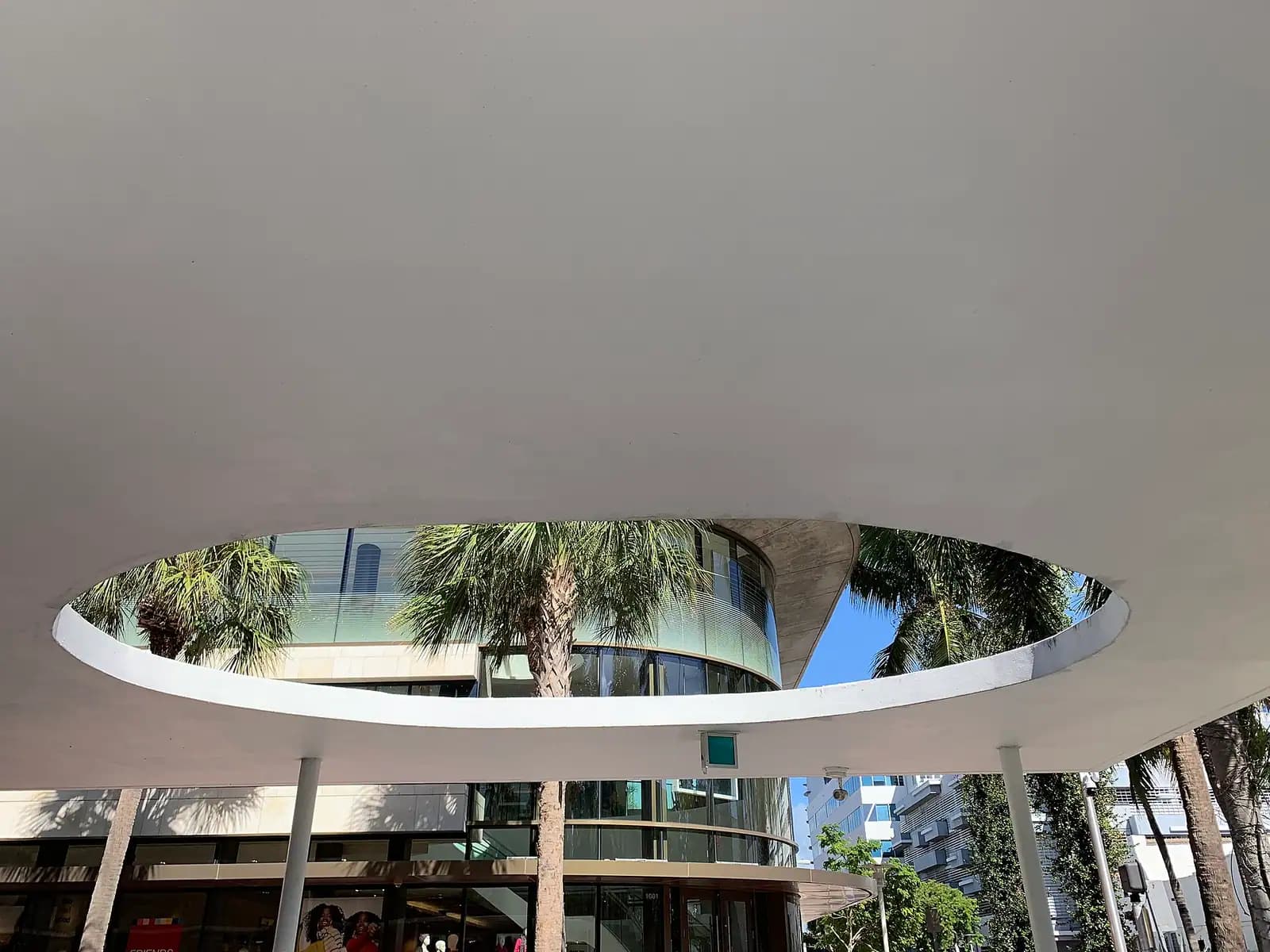
  • Brickell City Centre. The Climate Ribbon overhead is an engineered canopy designed to shade the walkways and channel the breeze through them. It is clever and it works, and it is not a sealed, refrigerated mall.
  • Vizcaya, the bayfront villa in Coconut Grove. The house is indoors; the formal gardens, which are a large part of what people come for, are not. It also needs a timed ticket booked ahead, which makes it a poor decision to take at short notice on a hot afternoon.
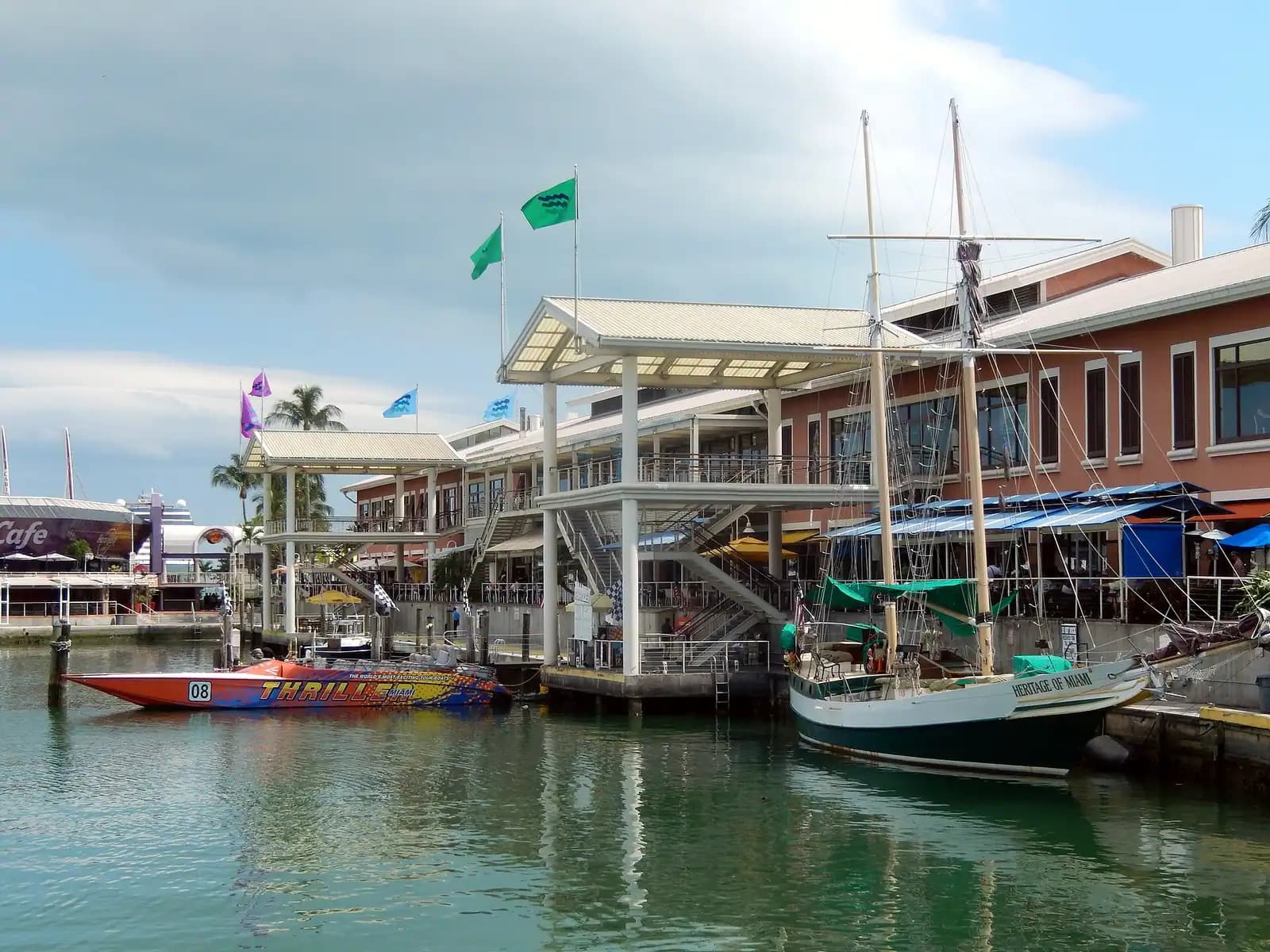
  • Bayside Marketplace. Covered walkways on the downtown waterfront, open to the air at the edges. Useful in a shower, limited against a heat index of 102.
  • The zoo and the tropical gardens. Both outdoors, both largely unshaded, both at their worst in the exact hours you are trying to escape.
  • An open-air rooftop. Shade at best, and the first thing to close when a storm arrives.

The test to apply: is there a door between you and the air? If not, it is shade, and shade in a Miami August is a delay rather than a solution.

On the ground

Where to go

Every place below has its own page — hours, parking, what it costs and what to expect when you get there.

  • A formal terraced garden with clipped hedges and stone steps leading down towards water
    Historic site

    Vizcaya Museum and Gardens

    Closed Tuesdays, timed entry, two hours minimum — the one Miami stop you build the rest of the day around.

    1.5–3 hoursTicketed, with advance online booking advised. Adult rates have recently been published anywhere from around $20 to the high $30s depending on what is open, with lower rates for children, students and seniors.

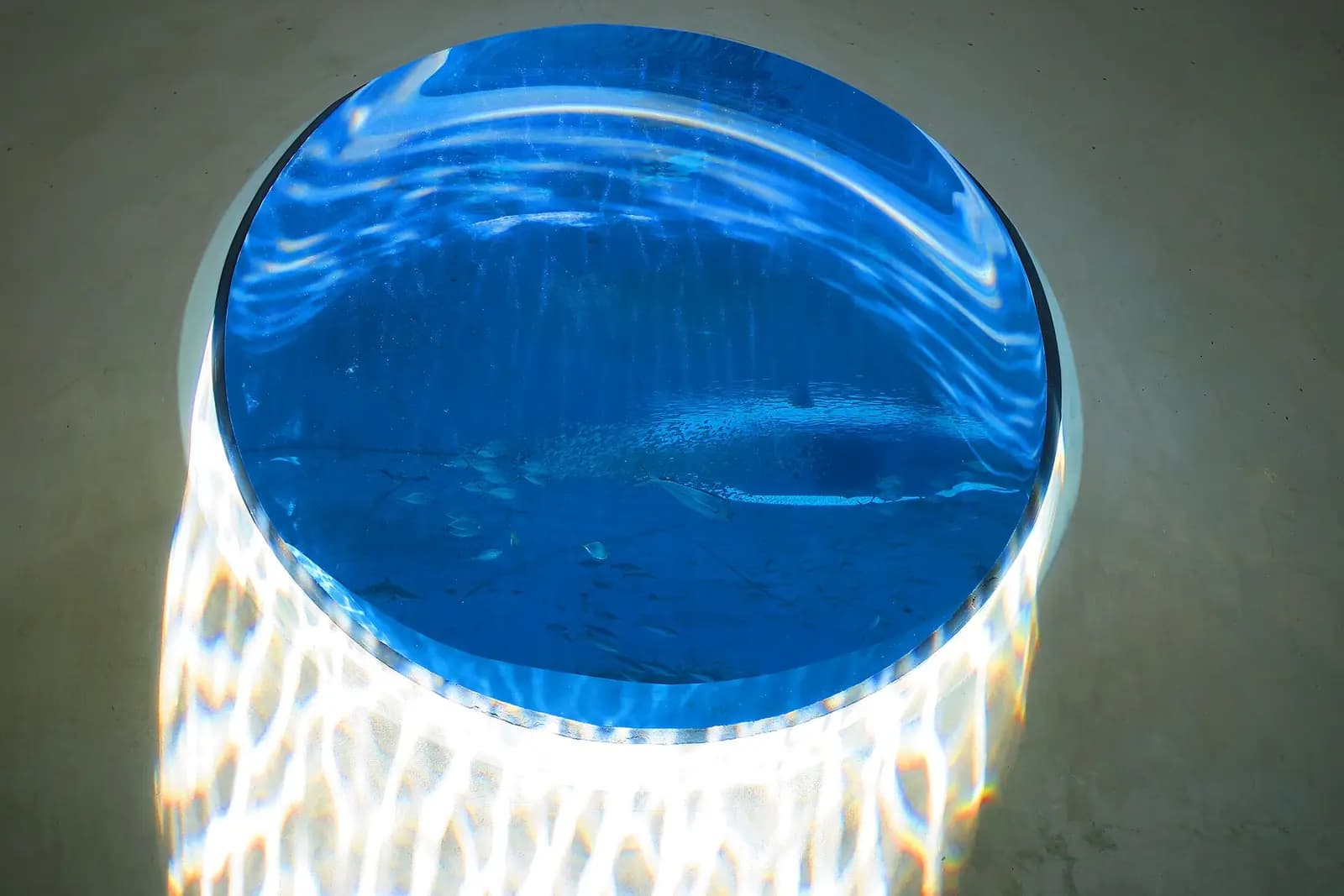
  • The acrylic oculus beneath the Gulf Stream Aquarium at Frost Science, seen from below with fish passing overhead
    Museum

    Phillip and Patricia Frost Museum of Science

    Book the planetarium show the minute you walk in — everything else about the visit arranges itself around that slot.

    2–4 hoursTicketed. Adult admission has recently been published in a range of roughly $23 to $30 depending on the day, with lower youth rates, and one planetarium show is normally included subject to availability.

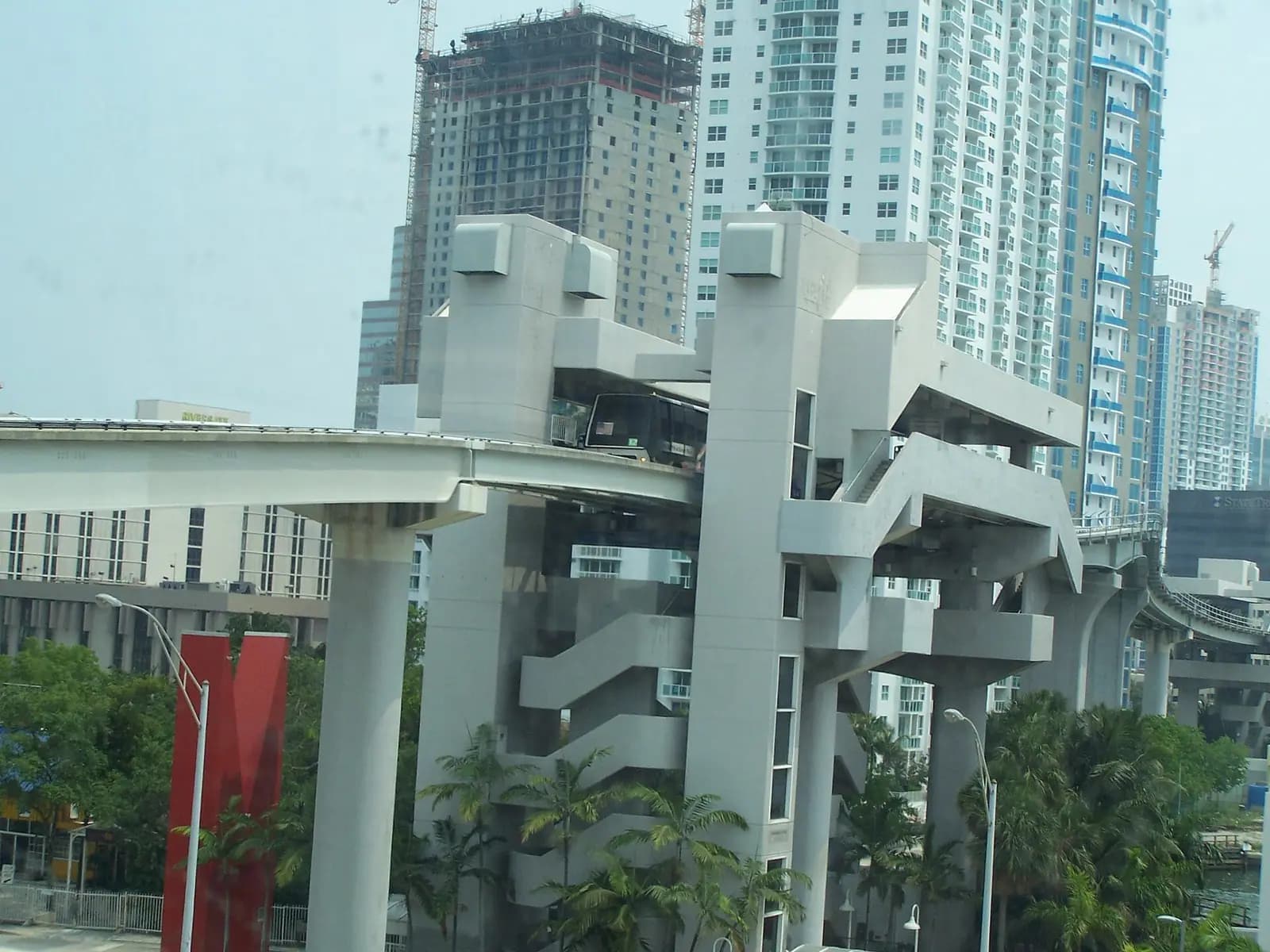
  • The elevated Riverwalk Metromover station and its concrete guideway between downtown Miami towers
    Free
    Landmark

    Metromover

    Thirty free minutes with a skyline view, and the only reliable dry seat in downtown Miami when a storm arrives.

    0.5–1 hoursCompletely free. There is no ticket, no tap and no gate on any of the 21 stations or three loops.

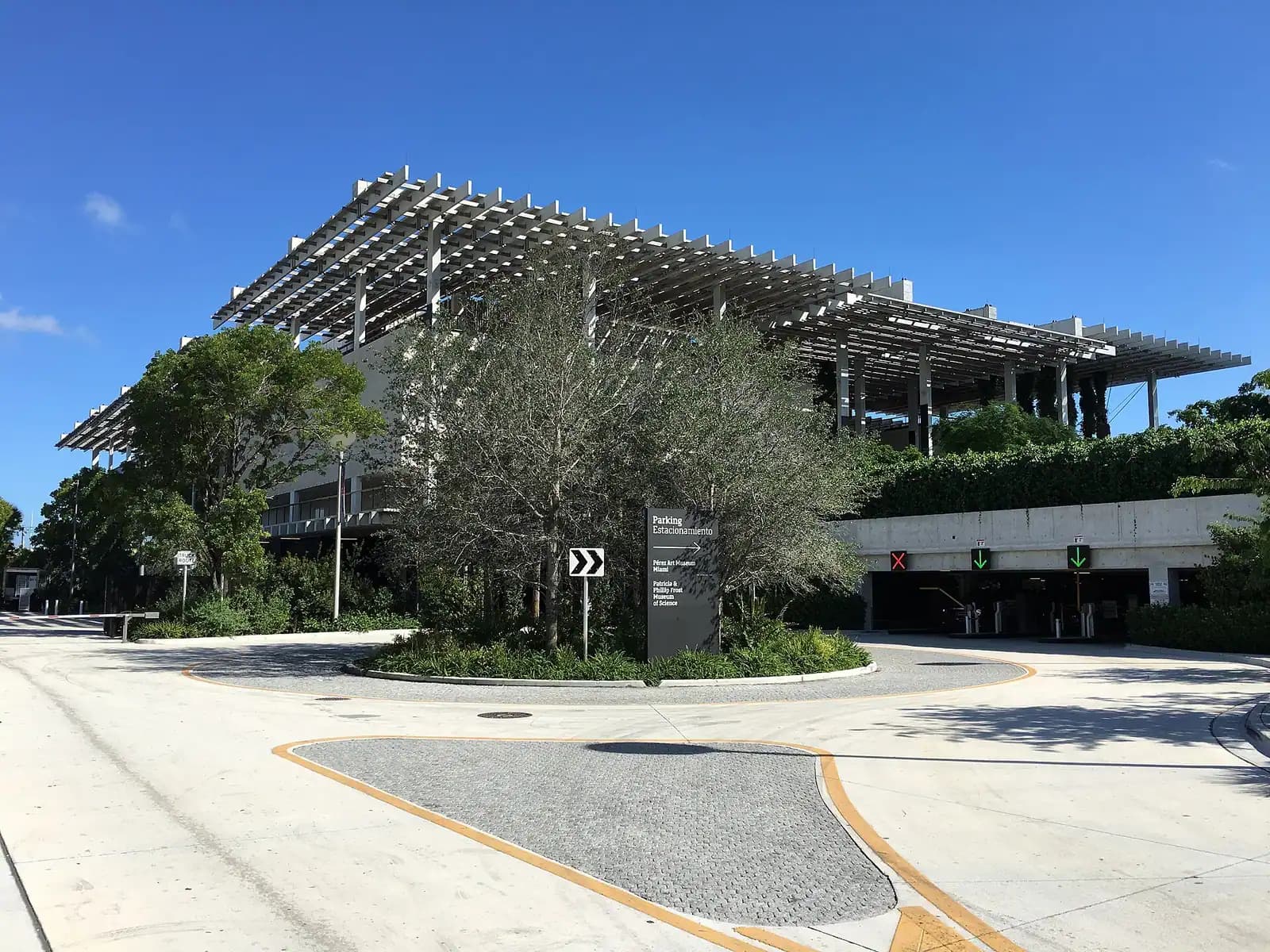
  • A wide covered terrace overlooking calm bay water with hanging planted columns along its edge
    Museum

    Pérez Art Museum Miami

    Ninety minutes, a recurring free evening, and a shaded bayfront veranda you can sit on without a ticket.

    1–2 hoursTicketed, with adult admission recently listed in the mid-teens and reduced rates for youth, students and seniors. Free entry has run on Thursday evenings and on the second Saturday of each month.

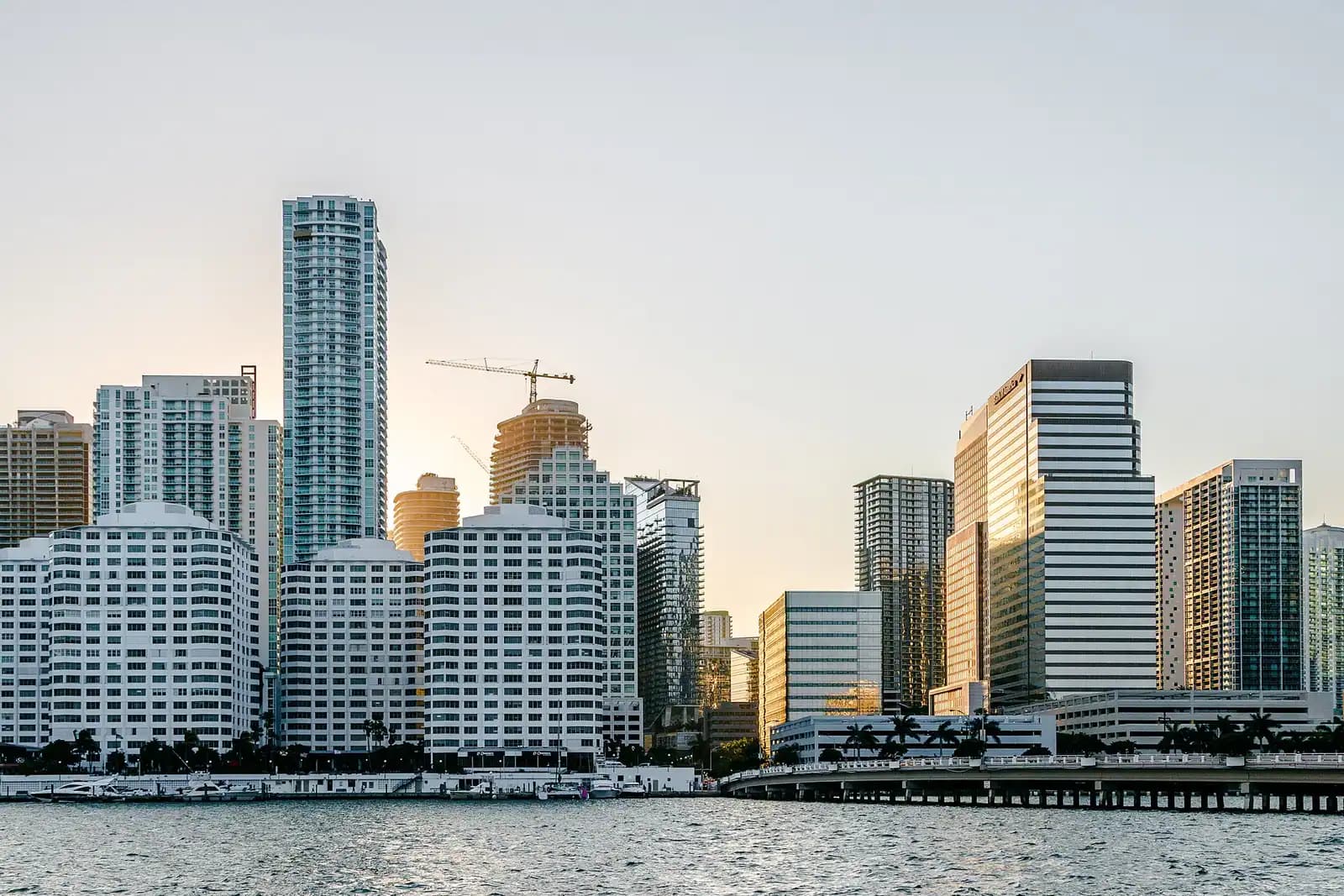
  • Glass residential towers rising above a tree-lined city street at dusk
    Free
    Neighbourhood

    Brickell

    The only part of Miami where the travel time between two things is four minutes on foot.

    1.5–4 hoursFree to walk, and the Metromover through it costs nothing. Food, drink and parking are the only expenses.

  • A pedestrianised shopping street with cafe tables set out beneath trees and awnings
    Free
    Shopping

    Lincoln Road

    Eight pedestrian blocks, ten minutes from the sand, and the only reliable cover on the island when the sky opens.

    1–3 hoursFree to walk, and the free outdoor programming at the eastern end costs nothing when it is running. Food, shopping and parking are the only expenses.

  • A geodesic dome structure standing in an open paved plaza between modern buildings
    Free
    Shopping

    Miami Design District

    Ten minutes north of Wynwood and indoors, which makes it the answer to both the storm hour and the heat.

    1.5–2.5 hoursFree to walk. The plaza dome, the commissioned garage facades and the public art cost nothing, and the contemporary art museum has long offered free general admission.

  • Pleasure boats moored in a downtown marina with office towers rising behind them
    Free
    Shopping

    Bayside Marketplace

    Where your boat leaves from. Arrive thirty minutes early, and know exactly what to do with those thirty minutes.

    1–2.5 hoursFree to enter and walk. Bay cruises, speedboat rides and the observation wheel are each ticketed separately by their operators.

Straight answers

Questions people actually ask

What indoor activities are there in Miami?

The core is the downtown museum park, where an art museum and a science museum with an aquarium and planetarium sit a few hundred metres apart on the fare-free Metromover. Add the permanently free contemporary art museum in the Design District, the free galleries clustered in Wynwood, and the genuinely enclosed malls at the county's northern and western edges. Miami is thinner on large indoor attractions than its size suggests.

What can you do in Miami when it is too hot?

Move the middle of the day indoors and keep the ends of it outside. From June to September, take roughly eleven to four under air conditioning and you get the two good outdoor windows — before ten and after five — almost for free. The heat index rather than the temperature is what does the damage here, because the humidity stops sweat evaporating, and it affects children and older visitors first.

Is Lincoln Road indoors?

No. Lincoln Road is an open-air pedestrian street on Miami Beach with cover in stretches and shade on one side depending on the hour. It is comfortable in March and it is not air conditioning in August. The same correction applies to Brickell City Centre, whose Climate Ribbon canopy shades and channels air over an open-air retail street rather than sealing it, and to the Wynwood mural courtyard, which is open to the sky.

Is Vizcaya a good option on a hot day?

Only partly. The house itself is indoors, but the formal gardens are a large share of the visit and they are fully outdoors and largely unshaded. It also requires a timed ticket booked in advance, which makes it a poor thing to reach for at short notice on a hot afternoon. Go in the morning, in a cooler month, with the ticket already bought.

How much do Miami museums cost?

The downtown art museum is in the region of $16 for an adult and free to everyone on the second Saturday of the month. The science museum next door, including the aquarium and one planetarium show, runs closer to $30. The contemporary art museum in the Design District is free permanently, and Wynwood's galleries are free to enter. Verify current pricing before you rely on any figure.

Can you spend a whole day indoors in Miami?

You can, but it takes planning and it takes you to specific places. The realistic chain is the two downtown institutions with a long air-conditioned lunch between them, or a drive out to one of the enclosed malls at the edges of the county. This city is built around being outdoors, and a page promising twenty indoor options for a full winter grey day is padding a short list.

Are Miami museums open on Mondays?

Some are and some are not. Several institutions here take a closing day early in the week and the specific day varies by museum, so check the one you are planning around rather than trusting a general list. The reliably open indoor options on any day are the fare-free Metromover, cinemas, and the enclosed shopping centres at the northern and western edges of Miami-Dade.