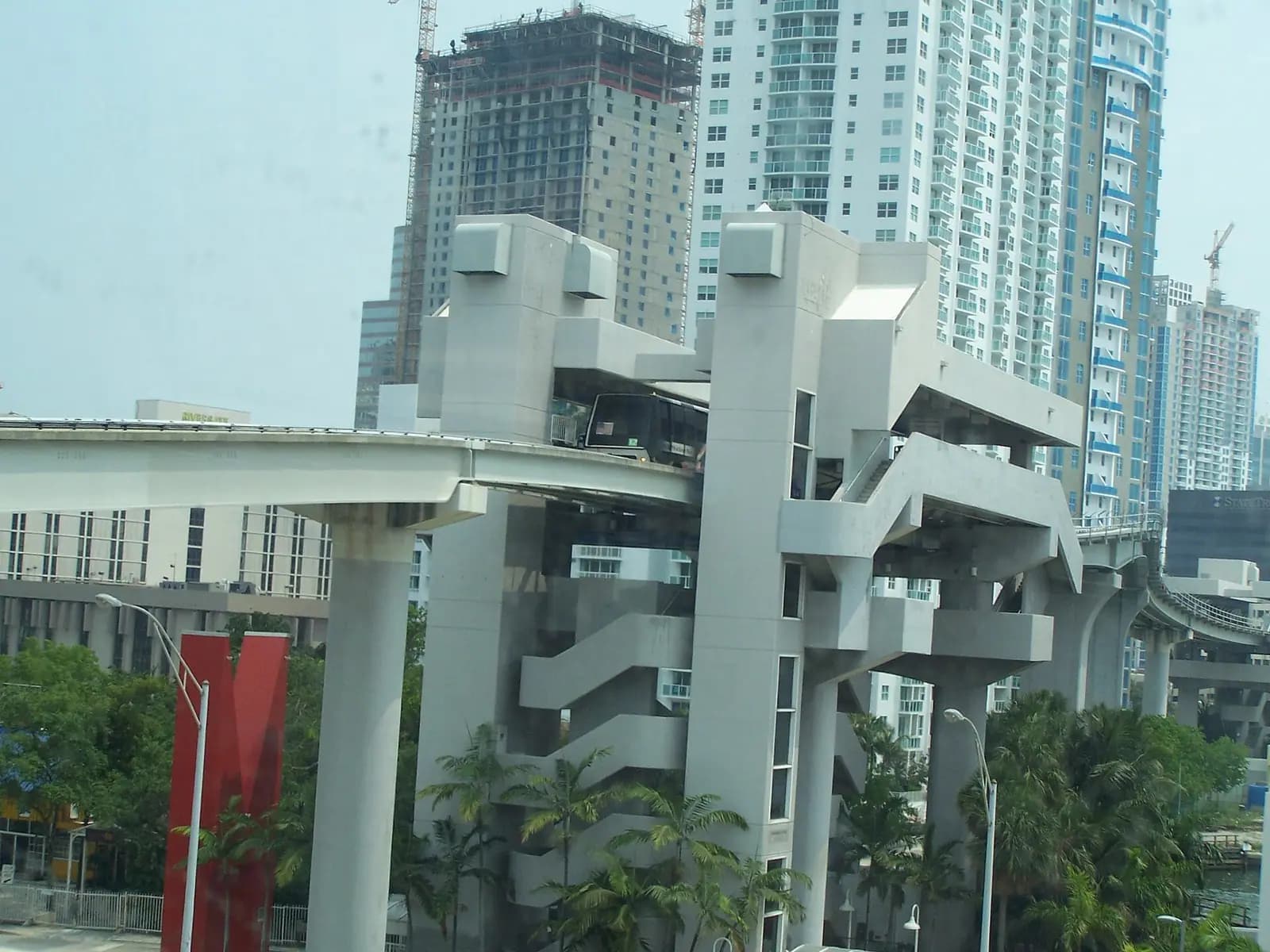
Treat this as a planning tool that happens to be worth riding, rather than as an attraction that happens to be transport. It is free — no ticket, no tap, no gate — it is elevated, it is driverless so the front window is a view, and a vehicle arrives roughly every ninety seconds at peak.
That combination solves four problems that come up constantly when you are building a Miami day.
The gap. You have thirty or forty minutes before a boat, a table or a show, and nothing near enough to start. A loop costs nothing and returns you to where you began.
The storm. Summer cells last thirty to forty minutes. Stations are elevated and sheltered, vehicles are enclosed, and a circuit is a dry half hour with a view instead of a wet queue for a rideshare.
The budget. A downtown day built on this system — museum park, bayfront, river mouth, Brickell — has a transport cost of zero, which is not true of any other part of the county.
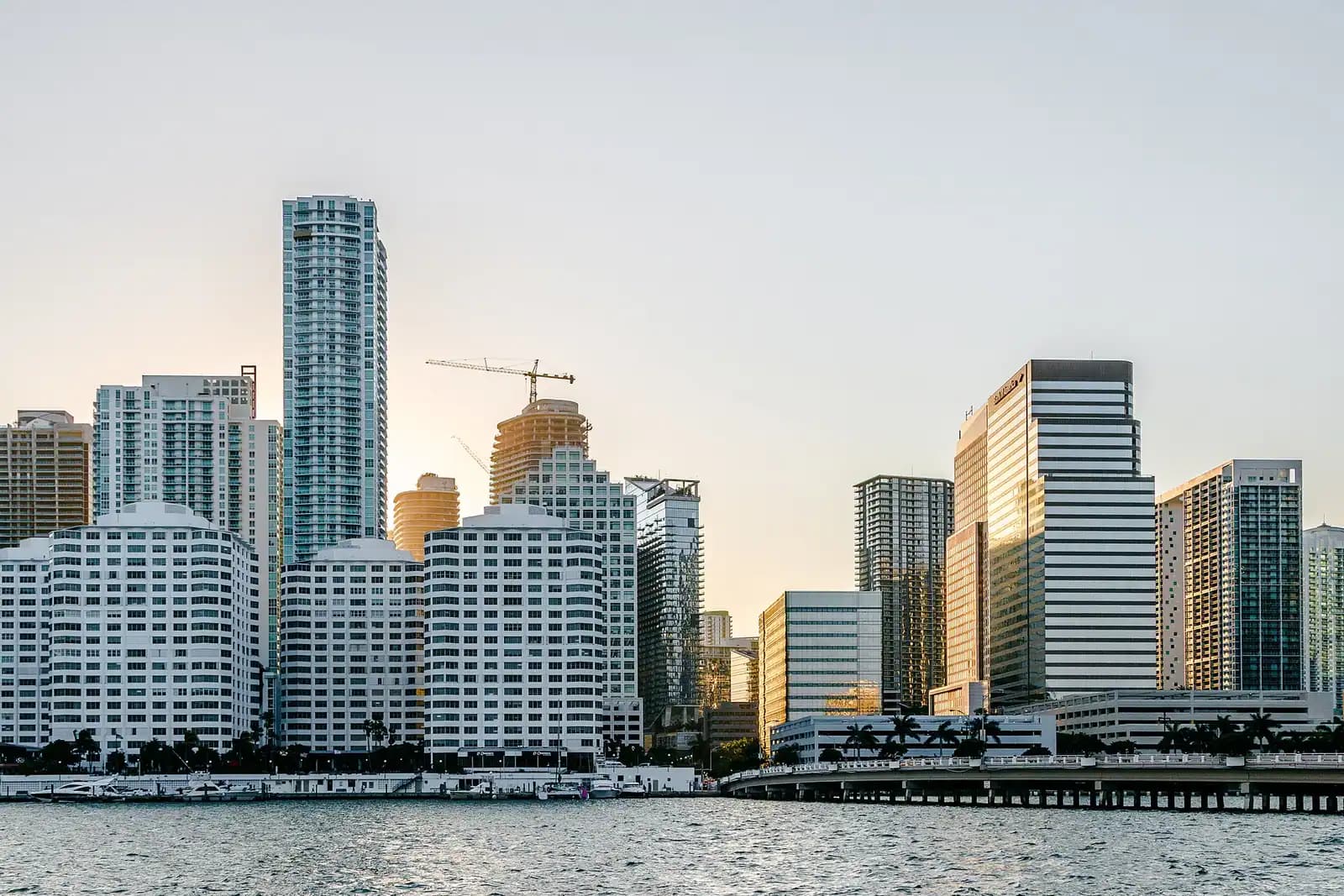
The sunset. From about half an hour before, the Brickell loop puts low light across the towers from an elevated track. It is the cheapest good view in the city, and there is no queue for it.
What it does not do matters just as much. Three loops cover downtown, the Omni district and Brickell, and nothing else. It does not reach Wynwood, the Design District, Coconut Grove, Little Havana, Vizcaya, the airport or Miami Beach. No rail of any kind crosses Biscayne Bay. Most free-transit Miami plans are sound right up to the point where they assume otherwise.
One live caution: the daily service span has been trimmed in recent years. Do not assume a late-night trip without checking.