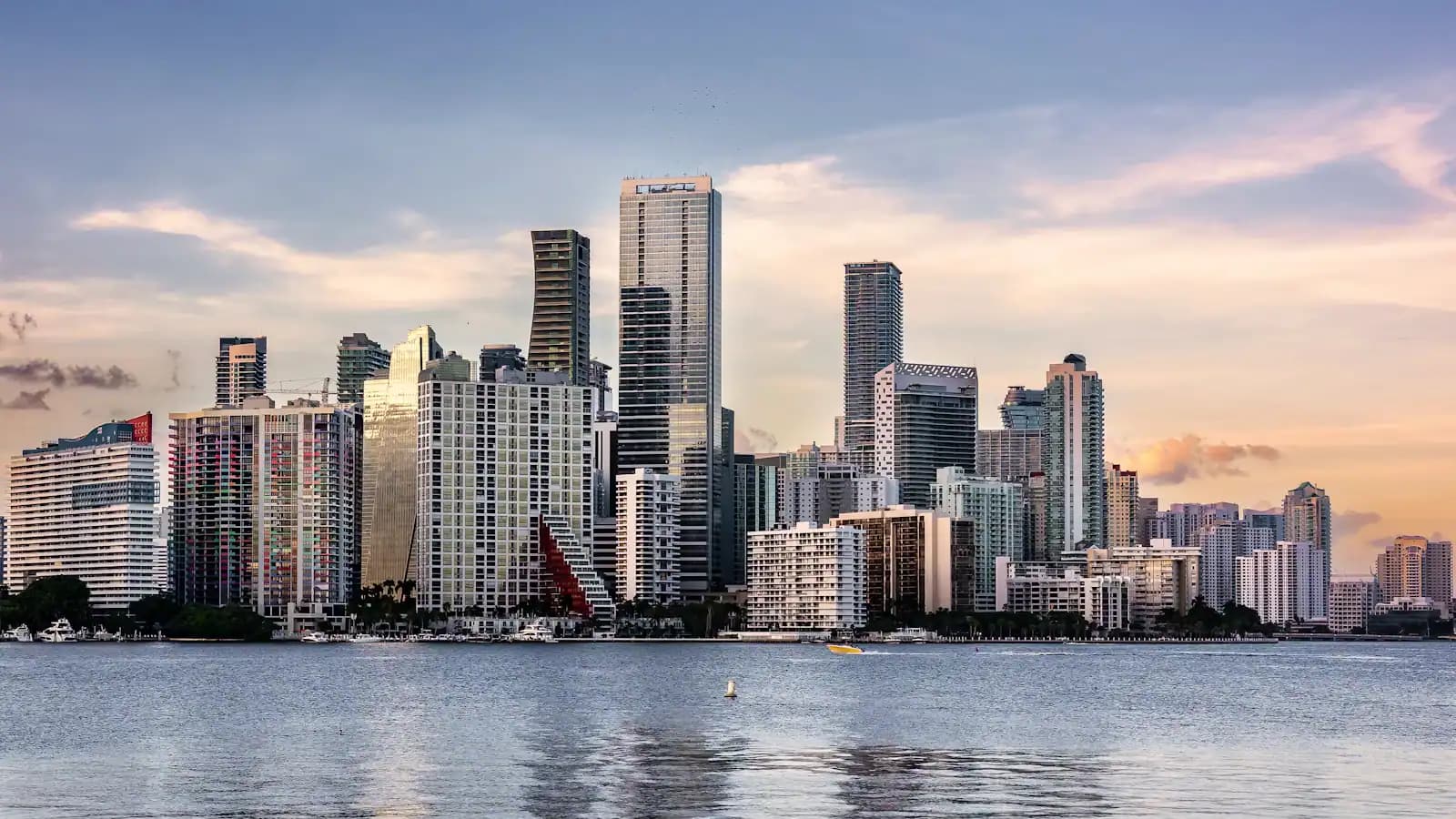
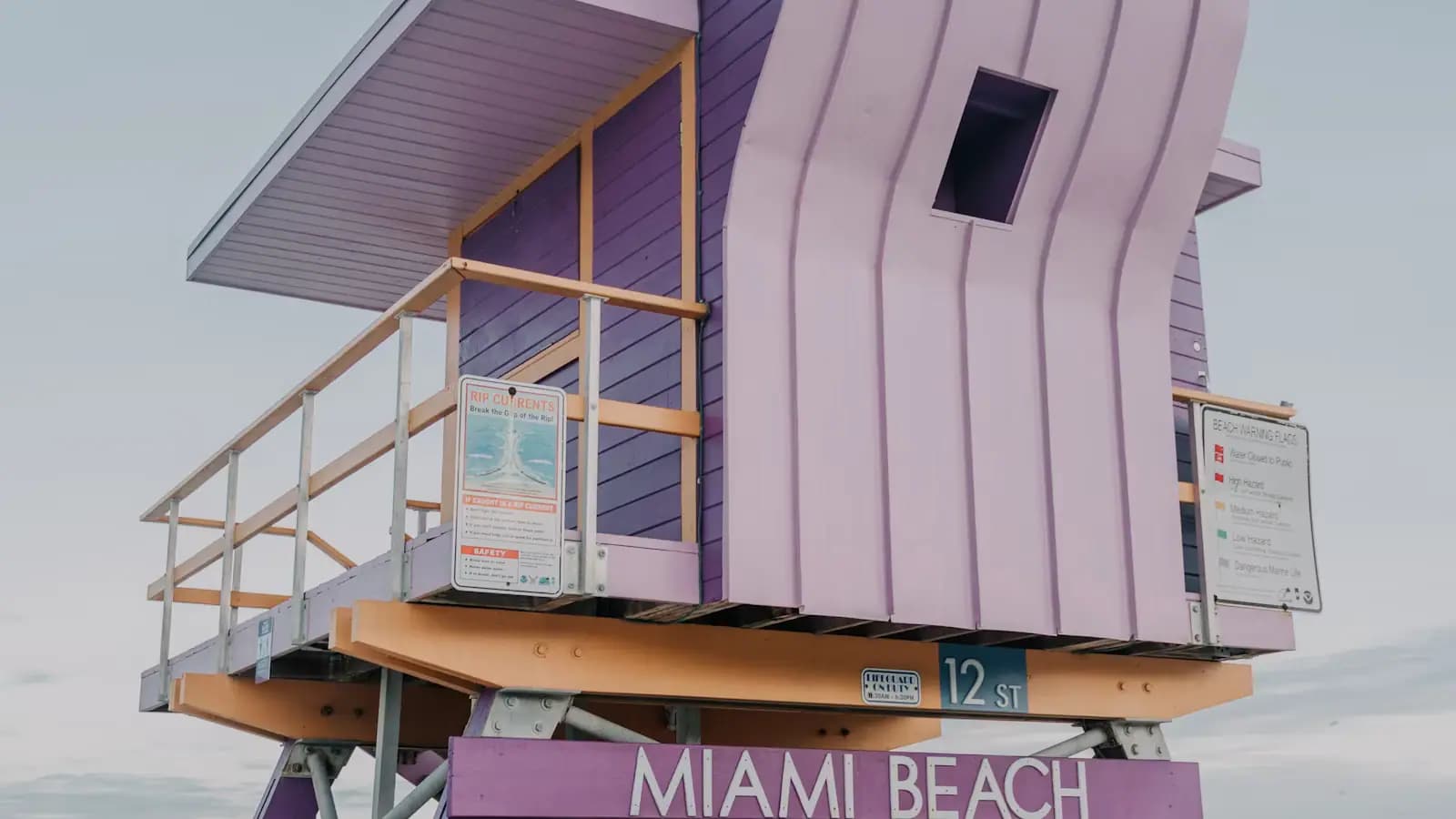
Miami has a reputation for being expensive, and the reputation is earned — but not in the place most visitors look for it. Admission prices here are ordinary. What costs money is the room you sleep in, the month you chose, and above all the moving around, because this is a city with a bay down the middle of it and every crossing has a price.
So here is a budget guide built as arithmetic rather than as a list of free things. Three days, costed line by line, per person, excluding accommodation. Verify anything you are relying on: these are bands from late 2026 and they move.
Three days, costed
| Line | The nothing day | The $40 day | The $90 day |
|---|---|---|---|
| Getting around | Free Metromover and free island trolleys | The same, plus two rideshare hops, $25 | The same, plus four hops, $50 |
| Morning | Sand, or the painted streets outside the ticketed courtyards | Same | Same |
| Admission | Nothing. Time it for a free museum day | One museum, around $16 | Museum plus a second ticketed thing, $35 |
| Lunch | Supermarket counter or a bakery, $0 if you carried it | Cuban counter lunch, around $12 | Sit-down lunch, around $25 |
| Afternoon | Metromover loop, a park, a library, a gallery with free entry | Same | A short bay cruise if one lands under the median |
| Dinner | Cook, or a ventanita and a pastry | Counter food, around $15 | Neighbourhood restaurant, around $40 |
| Realistic total | $0 | $40–$50 | $90–$120 |
The interesting column is the first one, because it is not a stunt. A genuinely good day here costs nothing if you stay on one side of the bay and use the free transit that already exists.
The free spine, and what it actually covers
Four things in this city are free, reliable and good, and they are the backbone of every cheap day here.
The sand. All of it. Florida beaches are public below the high-water line, including the stretches in front of the expensive hotels, and nobody may stop you walking there. Public access points are signed. What costs money is parking next to them, not standing on them.
The Metromover. Fare-free, no ticket, 21 stations across downtown, the Omni and Brickell on three connected loops, published as running from early morning until late evening. It is elevated and air conditioned, which makes it the best value hour in the city in August and the best rain shelter in the city in any month.
The Miami Beach trolleys. Five free routes covering the island end to end, published as running daily from roughly eight in the morning until about eleven at night at around twenty-minute headways. On the island, this replaces a car entirely.
Street art and public space. The painted blocks around Wynwood's warehouses are free; only the curated courtyard behind the gate is ticketed. Waterfront parks, the downtown baywalk and the residential causeway with its walking lane cost nothing at all.
What the free spine does not do is cross the bay. Nothing free connects the mainland to the island, and that gap is the exact point where a free day stops being free.
Where the money actually goes
Four costs do the damage, and none of them appears in most budget articles.
Parking, which is the real Miami tax. Beach meters run about $4 an hour and city garages roughly $20 to $30 for a day. Miami and Miami Beach use different parking apps. Two days of casual metered parking costs more than most museum admissions combined.
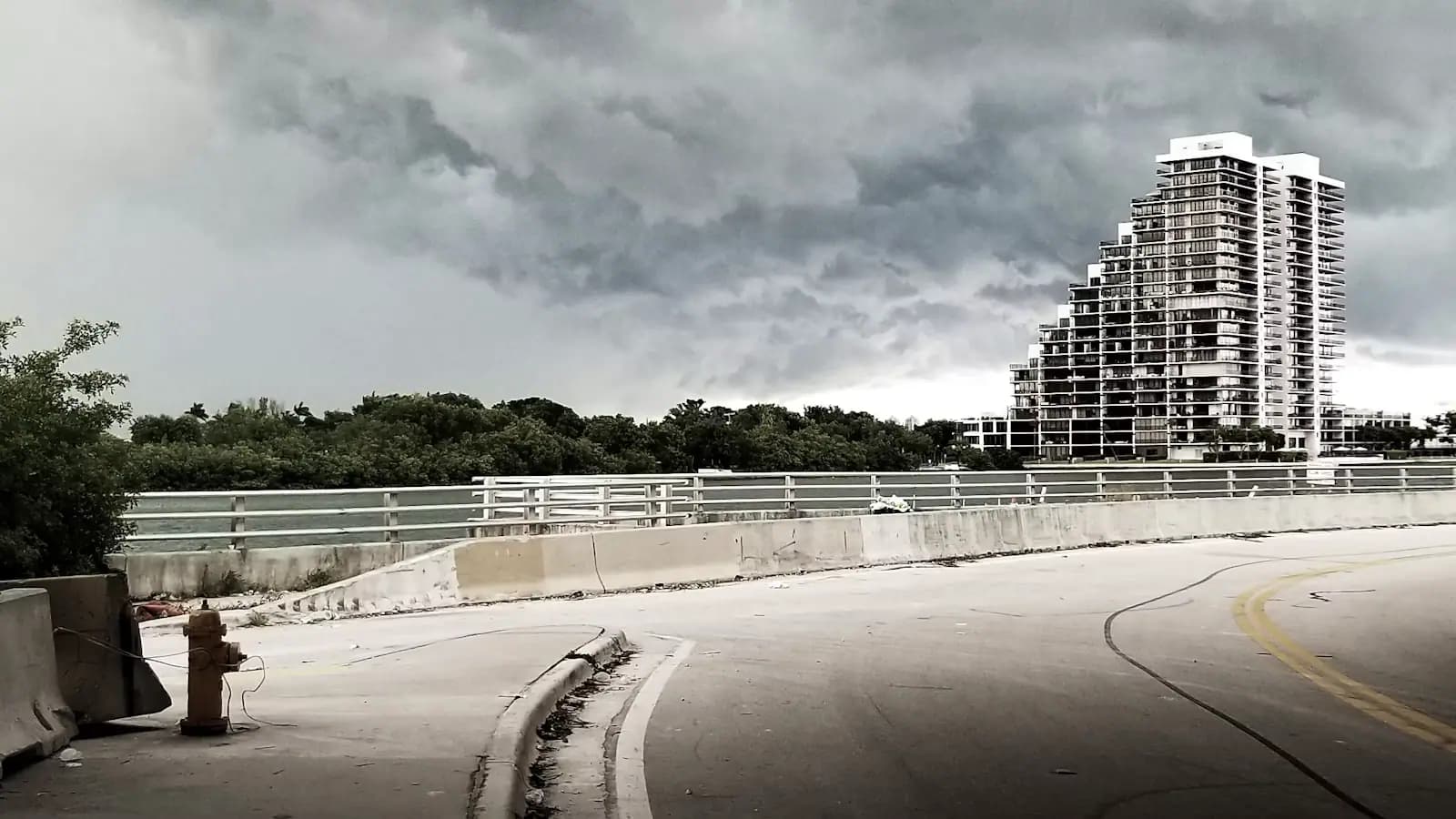
Tolls. The causeway out to Key Biscayne has run in the region of $3.25 each way. The expressways are cashless, and a rental car's toll-by-plate programme adds a daily administration charge on top of the tolls themselves, which is where a $9 week of tolls becomes a $45 line on the return invoice.
Rideshare. Figure $15 to $30 between mainland neighbourhoods and more across a causeway at peak. Four hops in a day is a meaningful fraction of a tour ticket, and surge in the two hours either side of six is not modest.
Resort fees and parking charges at the hotel. Common on both sides of the bay, frequently not included in the headline rate, and easily the largest surprise in a Miami trip budget. Read the total before you book, not the nightly rate.
The cheap season is the hot season
Room rates here move by a factor that would look like a typo in most cities. Winter is dry, pleasant, crowded and expensive; summer is hot, humid, stormy in the afternoons and cheap. Early December's art fair week and March's spring break both push rates up sharply on top of that.
If price is the binding constraint, come between May and early November, plan water activities for the morning, keep the middle of the day indoors, and accept the afternoon storm as a forty-minute fixture rather than a problem. The city is the same city. The bill is not.
Two dated bargains worth planning around. From the start of August to the end of September, restaurants across the county run three-course prix-fixe menus at a set price, which is the single best-value eating in the Miami year — lunch tiers have been meaningfully cheaper than dinner tiers, and the tiers are republished annually. And in May the visitor bureau runs a museums-and-attractions month with buy-one-get-one and discounted admission across a long list of venues.
What is genuinely worth paying for
A budget guide that tells you to spend nothing at all is not being helpful. Three things here repay their cost.
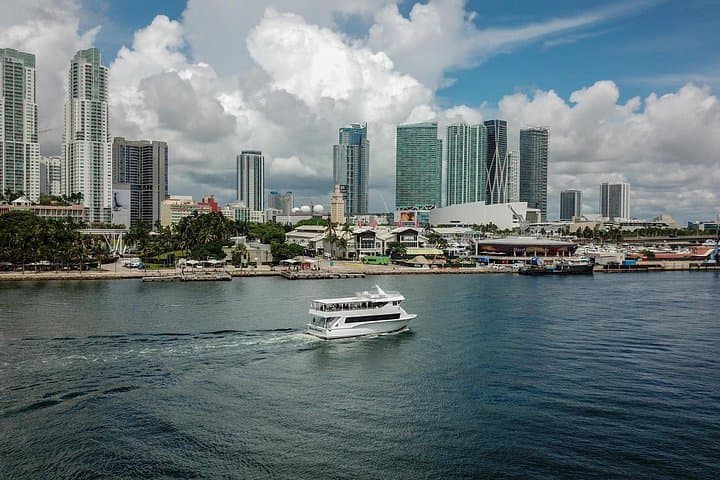
A short bay cruise, at ninety minutes and typically well under this market's roughly $89 median. It shows you both cities, the causeways and the island chain in one look, which is the entire geography of your trip explained faster than any amount of walking.
One walking tour on the first morning, if you are here for three days or more. Orientation early is worth more than a queue jump later.
Air conditioning in the middle of the day in summer. A long lunch is not an indulgence in August. It is the cheapest form of shelter available and it costs less than two rideshare hops.
What is not worth paying for on a tight budget: a rental car for a city-only trip, an upgraded seat on a bus tour, and any timed ticket bought without checking whether the venue has a free day that week.
A day that genuinely costs nothing
Not a thought experiment. This runs on the mainland, uses no vehicle you pay for, and requires only that you carry water and something to eat.
Early. Walk to the downtown bayfront while the air is still moving. The baywalk runs along the water with the island visible across it, and it is empty at seven.
Mid-morning. Onto the Metromover. Ride a full loop through Brickell and back through the Omni. It is elevated, free, and it is the cheapest orientation tour in the city — you will see the river mouth, the port, the causeways and the towers in under an hour.
Midday. A supermarket or bakery counter, eaten in a shaded park. This is where a free day is won or lost: buying lunch at a counter costs a fifth of buying it on a waterfront terrace twenty metres away.
Afternoon. The roof hour. A public library, a gallery with free entry, a covered market, or another Metromover loop if the sky has gone dark. On a second Saturday, the art museum on the bayfront is free, though the timed tickets go days ahead.
Late afternoon. Wynwood's outer blocks on foot. The murals on the street walls are free and there are far more of them outside the ticketed courtyard than inside it.
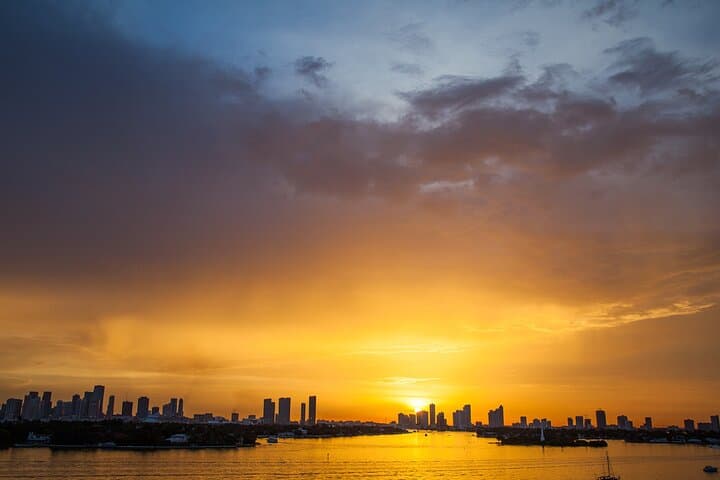
Evening. Back to the water for sunset, which happens over the bay behind the skyline rather than over the ocean. Total spend: whatever you put in your bag that morning.
Five ways a cheap Miami day quietly stops being cheap
- Crossing the bay more than once. Nothing free crosses it. Two crossings in a day is two paid rides at whatever the meter says, and at six in the evening the meter says a great deal.
- Eating on the seafront strip. The difference between Ocean Drive and two streets west is not subtle, and it is not a quality difference. It is a location rent, paid by people who will not be back.
- Metered parking by accident. Both cities enforce hard, both use different apps, and a beach ticket costs more than a day of transit. If you have a car and a free trolley route goes where you are going, leave the car.
- Rental toll programmes. The tolls themselves are small. The daily administration charge for the transponder is not, and it applies on every day of the rental whether you use a toll road or not.
- Buying a ticket on a free day. Several museums here have a monthly free day or a discounted month. Check before you buy, because the saving is the whole day's budget for one person.
Last updated
Opening hours, ordinances and prices move with the season. We re-check this guide rather than rewrite it, and the date above is the last time someone did. How we research and correct.