Skip to content
Search
Menu

We earn a commission if you book through this link. You pay the same price.

Plan your trip

Getting Around Miami: Every Leg Costs Minutes, and the Hour Decides

Last updated

Getting around Miami by the clock: which causeway to use, where the free Metromover and trolleys stop, when rideshare surges, and why a car hurts here.

An elevated automated train running between high-rise buildings above a city streetUnsplash

Getting around Miami is not complicated. It is counter-intuitive, and the mistakes cost time rather than confusion. Three facts do almost all the work.

The city is split by water. Miami is on the mainland. Miami Beach is a separate city on a barrier island, and the only links are causeways: the MacArthur from downtown, the Julia Tuttle from the Wynwood and Design District side, the Venetian across a chain of small residential islands, and the 79th Street causeway further north. No rail line crosses. The consequence is a single number you should apply to every plan you make: six miles from Wynwood to Ocean Drive is about fifteen minutes at ten on a Tuesday morning and can be fifty at six on a Friday, with rideshare surge stacked on top. One crossing a day is a plan. Three is a day spent in a car.

The free network is excellent and stops exactly where you would want it to continue. The Metromover covers downtown, the Omni and Brickell on three loops and 21 stations, costs nothing, needs no ticket, and arrives roughly every ninety seconds at peak. Miami Beach runs five free trolley routes, published as 8am to 11pm daily, covering the length of the island. Between them they will move you around one side of the bay all day for nothing. Neither of them crosses the water, and nothing free does. That gap, of six miles and one bridge, is where a free day quietly stops being free.

Rideshare is the practical default, and it surges on a timetable. Coverage is dense on both sides of the bay and waits are usually short. Prices spike at hours you can predict: airport arrival banks, the two hours either side of six on any weekday causeway, closing time in the entertainment district, the moment a downtown event empties, and the whole of Art Basel week. A trip you priced at midday can cost twice as much at seven, and the same journey at two in the morning can cost more again.

From those three facts everything else follows. Hire a car for the days that leave the city, not for the days that stay in it. Judge every itinerary by how many bay crossings it contains and at what hour they happen. And on the island, walk — because the island is small, flat and continuous, and a car there is a parking problem you are paying to carry around.

The free network, and exactly where it stops

The Metromover is the best transport decision in this city and most visitors never board it. Fare-free with no ticket, no tap and no barrier. Three loops and 21 stations covering downtown, the Omni and Brickell, elevated a storey above the street, air-conditioned, and roughly every ninety seconds at peak. It links the downtown rail station, the bayfront market, the waterfront museum park and the Brickell shopping centre without a single kerb. Two caveats: the daily service span has been trimmed in past years, so check the current hours before you build a late return around it, and it does not cross the bay.

Metrorail is one elevated line. It runs from the airport and Hialeah in the north through Brickell and downtown, then south past Vizcaya and Coconut Grove to Dadeland. Frequent, cheap, clean and useful for exactly those stops. It does not reach Wynwood, the Design District or Little Havana, and no rail line crosses Biscayne Bay at all. Treat it as a spine for a mainland day that starts or ends at the airport, rather than as a way of getting around the city.

The Miami Beach trolleys are the reason an island day can cost nothing to move around. Five free routes, published as running 8am to 11pm seven days a week, at roughly twenty-minute average headways, with a Collins Express running the length of the island at closer to fifteen. Between the trolleys and your own legs, a full day on Miami Beach needs no car and no fares at all.

The City of Miami runs its own free trolley loops through Wynwood, Brickell, Coral Way and the Grove. They stop constantly and they are slow, which makes them poor for crossing the city and perfectly good for a short hop you would otherwise walk in the heat.

And the gap. Nothing free connects the two cities. That six-mile crossing is a rideshare, a taxi or a county bus, and it is the one leg on which a zero-cost day here stops being zero-cost.

Surge is a timetable, not bad luck

When to go

Rideshare pricing here is predictable enough to plan around, which means you can avoid most of it.

WhenWhat is happeningWhat to do
Airport arrival banksSeveral wide-body flights land togetherA metered taxi is often cheaper at exactly this moment
7:30–9:30amCommuter traffic onto the mainlandFine for short hops within a neighbourhood
4:00–7:00pm, both directionsThe worst causeway window of the dayDo not cross. Cross before four or after eight
Friday from 4:00pmThe weekend starts, on the bridgesArrive early or plan an island evening
When an arena or park event emptiesSeveral thousand people at onceWalk ten minutes away from the venue before requesting
Entertainment district closingEveryone leaving the same blocksAgree the plan before you go out. Metered cabs do not multiply
Art Basel week, early DecemberThe entire city, every eveningBudget for it or stay on one side of the bay

Two things worth knowing about taxis here. They are metered rather than algorithmic, so their fares do not multiply with demand, which makes them the better choice at precisely the hours rideshare is worst. And Miami-Dade ended MIA's flat-rate taxi zones in July 2022, so an airport cab is now metered with a minimum fare and an airport origination charge on top. Confirm the fare basis with the dispatcher before you get in rather than afterwards.

The Metromover is the surge-proof option inside its footprint, which is why a downtown or Brickell base is quietly the cheapest way to run a Miami trip. It costs nothing at six in the evening and nothing at six in the morning.

Airports, the port, and the transfer that goes wrong

When to go

Miami International, eight miles west of downtown. Budget 20 to 30 minutes to Brickell or downtown, 30 to 45 to South Beach, and add a third to anything crossing a causeway between four and seven in the evening. The detail that catches people is the Miami Intermodal Center: hire cars, Metrorail and Tri-Rail are all there rather than at the terminal, reached by a free Skytrain that takes a genuine fifteen minutes. Add it to your plan rather than discovering it with a flight to catch.

Fort Lauderdale–Hollywood, 28 miles north. Frequently cheaper to fly into, and worth pricing against the transfer rather than the fare alone. Driving down I-95 after three in the afternoon turns fifty minutes into ninety with no warning. The alternative that actually works is Brightline: a short ride from the terminals to Fort Lauderdale station, then roughly half an hour to the downtown Miami station, where the free Metromover collects you. If your Miami days are mainland days, that combination is frequently faster than MIA plus a causeway.

For a layover, the honest arithmetic. A five-hour gap between flights gets you downtown and back with margin, and it does not get you to the beach and back. The Metromover makes the downtown version genuinely worthwhile: free, no ticket, and it starts at the rail station that Metrorail's airport line reaches.

PortMiami sits on Dodge Island in the middle of the bay, reached from downtown over the Port Boulevard bridge. A cruise day has a hard shape: you are off the ship and mobile roughly between nine and one, and on a heavy Saturday twenty thousand other people are trying to reach the same two causeways in the same hour. Downtown, the bayfront market and the Metromover all work inside that window. A half-day trip west does not, and neither does anything across the bay.

Book the airport transfer for the hour, not the distance. The same journey at eleven in the morning and at six in the evening are different journeys, and only one of them fits in the thirty minutes you allowed.

On foot and on two wheels, and where that becomes a bad idea

Local tips

The rule that fixes most broken Miami itineraries: walk inside a neighbourhood, ride between them. The walkable pockets are real and small, and the gaps between them are multi-lane arterials with no shade.

Where walking works. The deco streets of South Beach between Fifth and Twenty-Third. Lincoln Road. Calle Ocho. The Wynwood grid. The few blocks of the Design District. Miracle Mile. The Grove village centre. The downtown Baywalk and the Riverwalk.

Where cycling is genuinely good. The Miami Beach beachwalk, which runs most of the length of the island and is the fastest way between beach neighbourhoods at a weekend. The Venetian Causeway, with its separated path and the best crossing view in the city. The Rickenbacker at dawn, which belongs to cyclists before the traffic arrives. Dock-based bike share and app scooters cover both sides of the bay.

Where it is not. Mixing with traffic on Biscayne Boulevard, Collins Avenue or any six-lane mainland road. South Florida has a poor record for pedestrian and cyclist collisions, drivers turn across crossings, and the arterials were built for cars alone. Cross at signals, assume you have not been seen, and do not take a straight line on a map as evidence that a route is walkable.

And treat heat as a transport constraint. From June to September the heat index regularly passes a hundred by early afternoon. A fifteen-minute walk at ten in the morning is a pleasure and the same walk at two is a decision you will regret. Carry water, plan shade between eleven and three, and put the long walking legs at either end of the day.

Accessibility, briefly. This city is flat, which removes the biggest obstacle. The Metromover is lift-served and level-boarding at every station, both cities' trolleys run accessible vehicles, and the beachwalk is a continuous paved path along most of the island. Beach wheelchair schemes are run park by park rather than centrally, so contact the specific park in advance rather than assuming a chair will be there.

Book it

What you can book

We could not find tours matching this right now

Nothing came back for Miami hop-on hop-off bus. Operators add and retire experiences constantly, so this list changes week to week. Try a broader category, or come back in a day or two.

The four causeways, and which one is yours

How they compare

The choice is not aesthetic. Each causeway lands you somewhere different, and picking the wrong one adds a leg at the far end.

CausewayFromLands you atTollWhen to use it
MacArthurDowntown, the port, BrickellFifth Street, South BeachNoneThe default for any downtown-to-South-Beach trip
Julia TuttleWynwood, the Design District, Midtown41st Street, Mid-BeachNoneWhen your afternoon was in Wynwood, or when the MacArthur is stacked
VenetianDowntown, the OmniDade Boulevard, mid-islandTolledOn a bike or on foot. It has a separated path and is the best crossing in the city
79th StreetNorth of downtown, Little Haiti and beyondNorth BeachNoneOnly if you are already north. It is a long way from anything central
RickenbackerBrickellVirginia Key and Key BiscayneTolledThe only road onto Key Biscayne. Fifteen to twenty minutes from downtown

Timings to plan with, not schedules. Downtown to South Beach on the MacArthur runs twelve to fifteen minutes mid-morning and forty to fifty at six on a Friday. Wynwood to Mid-Beach on the Julia Tuttle runs about fifteen minutes mid-morning and thirty-five to forty-five in the evening peak. Add a third to any of these in the two hours either side of six on a weekday.

Drawbridge openings are normal. The spans lift for tall vessels, it costs about five minutes, and nothing can be done about it. Do not build a plan with a five-minute margin on the far side of one.

Landing point matters more than people expect. The Julia Tuttle puts you at 41st Street, which is another ten minutes south to South Beach by car or one free Collins Express trolley. If your destination is Ocean Drive, the MacArthur is usually the better crossing even when the map suggests otherwise.

Why a car is a liability in South Beach, Wynwood and Brickell

Before you book

A hire car in the walkable parts of this city is not a convenience. It is an object you pay to store, repeatedly, in the most expensive places available.

Parking costs, in bands. South Beach meters run around $4 an hour and city garages roughly $20 to $30 for a day. Hotels on both sides of the bay generally charge a nightly self or valet rate on top of the room, and on the island that figure can be a meaningful fraction of the room rate itself. Valet in the entertainment district runs $30 to $50 plus the tip.

Two cities, two apps. Street parking is metered and paid by app on both sides of the bay, and Miami and Miami Beach use different operators. Download both before you need either, because you will be standing in a loading bay with a meter running when you find out.

Three places where finding a space eats real time. Wynwood after seven on a Friday or Saturday, which is the hardest parking in the county outside an event and where private lots on the numbered streets price accordingly. South Beach between noon and sunset on a winter weekend, where the answer is a municipal garage rather than a kerbside space. And the Grove village centre on a Saturday evening.

Enforcement is brisk. Residential permit zones mean exactly what the sign says, including the hours at which the rules change, and the tow lot is not a myth. During the busiest mid-March weekends, Miami Beach has restricted vehicle access on and around Ocean Drive entirely, and those arrangements change year to year.

Tolls are cashless and quietly expensive. There are no booths. Tolls are read from a transponder or photographed from the plate, and rental companies enrol you in a programme that adds a daily administration fee, frequently charged for every day of the rental rather than every day you use a toll road. A $12 week of tolls becomes a $60 line on the invoice. Ask at the counter, and ask specifically about the daily fee.

And leave nothing visible in a parked car. Beach lots, trailheads and garages, in daylight. Break-ins are the single most common thing that happens to visitors here. Pack the boot before you arrive, not in the space.

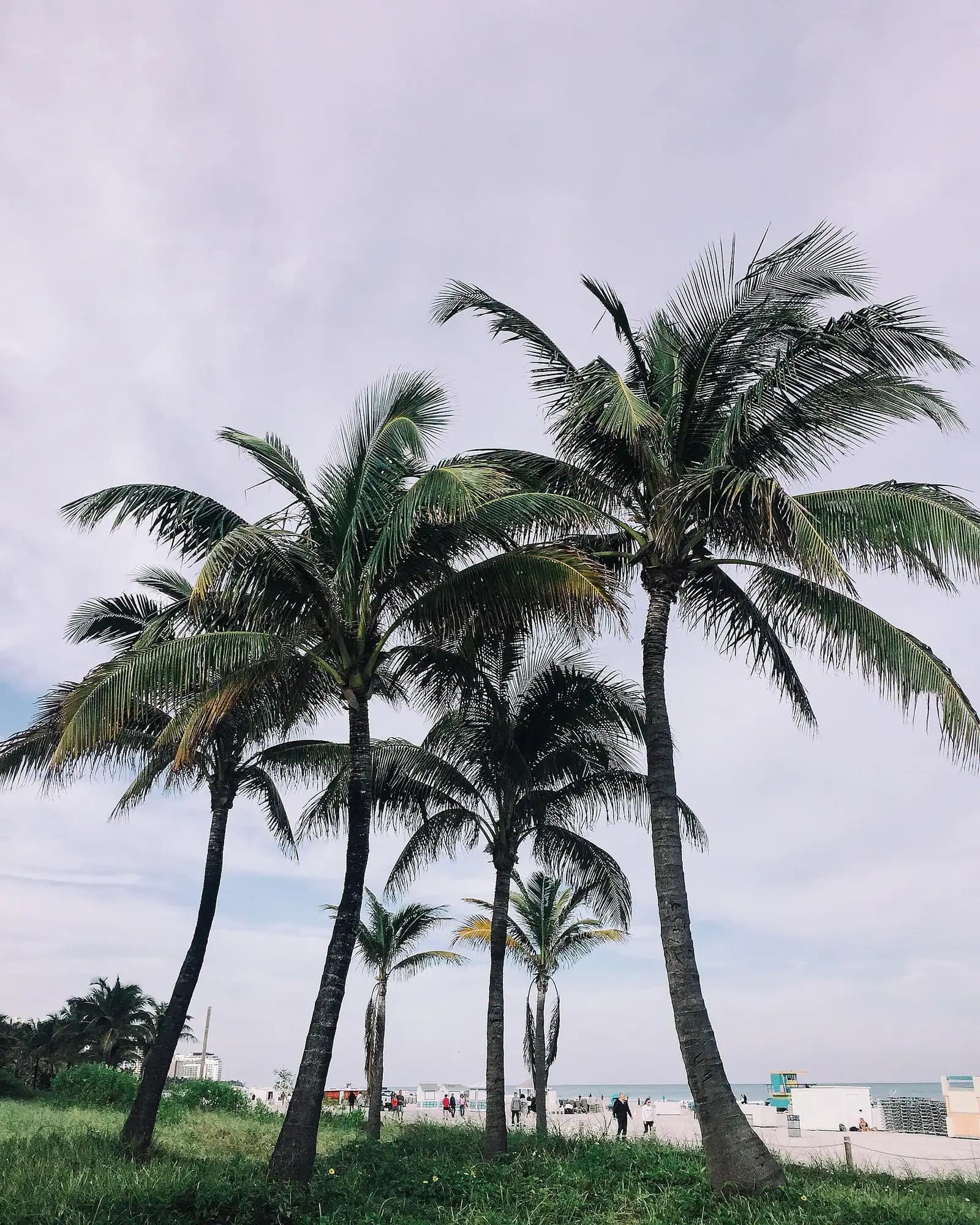
The days a hire car earns its keep

How they compare

Hire for the days that leave the city, not for the length of the trip. Two days out of a week is the usual right answer.

Your dayCar?Why
South Beach and the islandNoWalkable, five free trolley routes, and parking costs more than lunch
Downtown and BrickellNoThe free Metromover covers it better than driving does
Wynwood, the Design District, Little Havana, the GroveRideshareEach is walkable inside itself; hops between them are short
Key Biscayne beach parksYes, for the dayTolled causeway, then a per-vehicle park fee. Cheap for four, poor for one
West on US-41 to the airboat beltYes, or a booked tripNo public transport goes there at all
South towards Homestead and the RedlandYesSpread out, and the return is the part that needs flexibility
The Upper KeysYes, or a booked tripCheaper than seats for three or more people
Fort Lauderdale and northNoBrightline reaches it in about half an hour with no traffic risk

Collecting the car. At the airport, hire cars and the trains sit at the Miami Intermodal Center, a free Skytrain ride from the terminal and a genuine fifteen minutes each way. Collecting in the city is usually faster if you are already here. Either way, add an hour to the first day for paperwork and the walk.

One habit that saves a day. Park the car once when you return to the city and leave it. The temptation after a day out is to drive to dinner, and in Wynwood on a Friday night or anywhere on the island at seven, that decision costs thirty minutes and a garage fee.

On the ground

Where to go

Every place below has its own page — hours, parking, what it costs and what to expect when you get there.

  • A wide sandy beach with rows of parasols and a line of low buildings set well back from the water
    Free
    Beach

    South Beach

    Budget three hours minimum, because the sand is only half of it — the causeway takes the rest of your afternoon.

    2–6 hoursThe beach itself is free. Parking is not, and loungers and umbrellas from the hotel concessions are rented by the day.

  • An empty stretch of pale sand meeting calm shallow water under a clear sky
    Beach

    Key Biscayne

    Fifteen minutes from Brickell over a tolled causeway — closer than the beach everyone books, and a completely different kind of day.

    4–6 hoursThe causeway toll is a small electronic charge per crossing, and each beach park charges a separate per-vehicle entry fee at the gate. The island's roads and village are free to drive through.

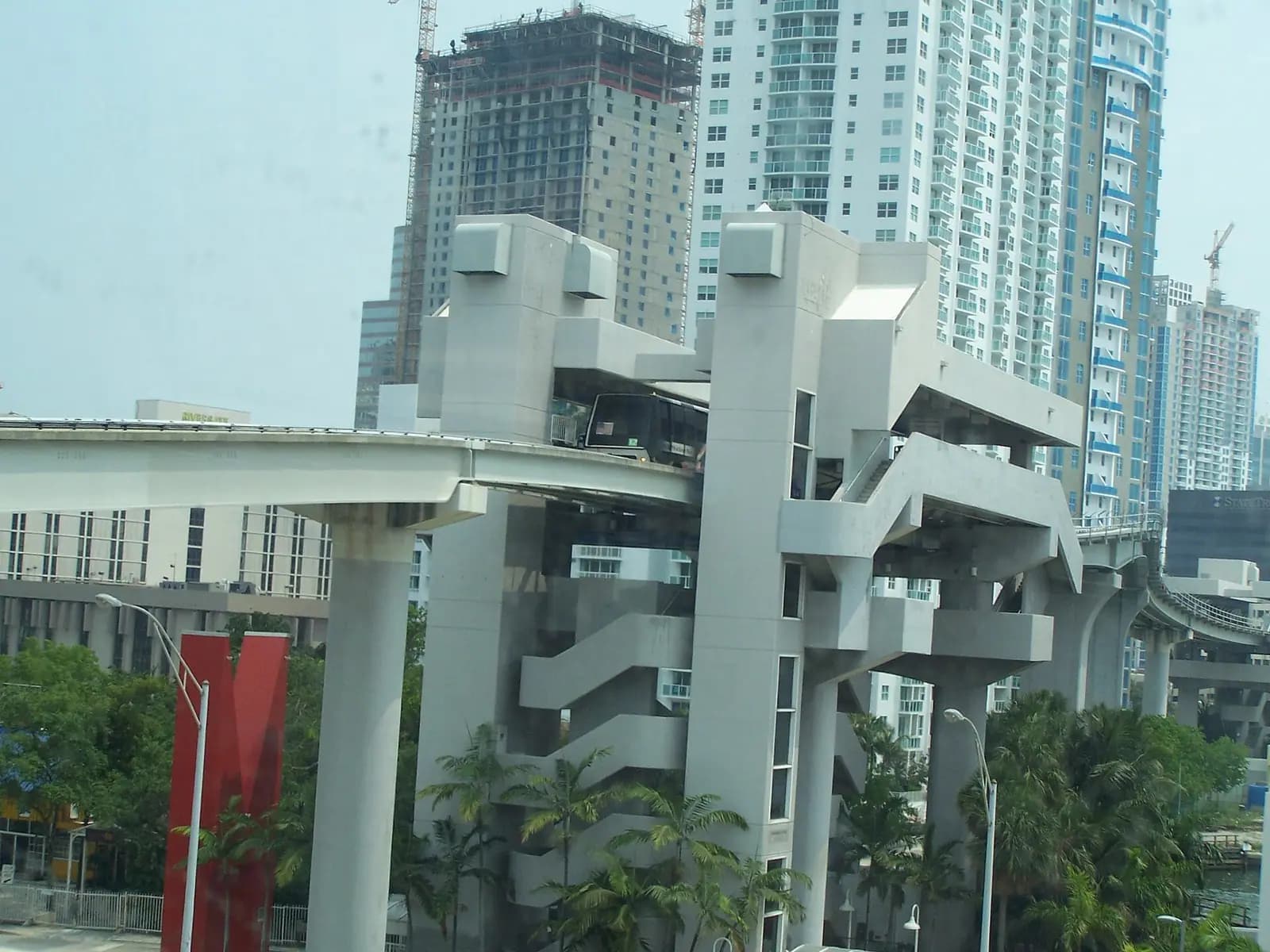
  • The elevated Riverwalk Metromover station and its concrete guideway between downtown Miami towers
    Free
    Landmark

    Metromover

    Thirty free minutes with a skyline view, and the only reliable dry seat in downtown Miami when a storm arrives.

    0.5–1 hoursCompletely free. There is no ticket, no tap and no gate on any of the 21 stations or three loops.

  • A residential street shaded by a continuous canopy of mature trees
    Free
    Neighbourhood

    Coconut Grove

    The one Miami neighbourhood with a real tree canopy, which makes it the only outdoor block that works at two in the afternoon.

    2–4 hoursFree to walk, and the marina walk, parks and canopy streets cost nothing. Food, drink and parking are the only expenses.

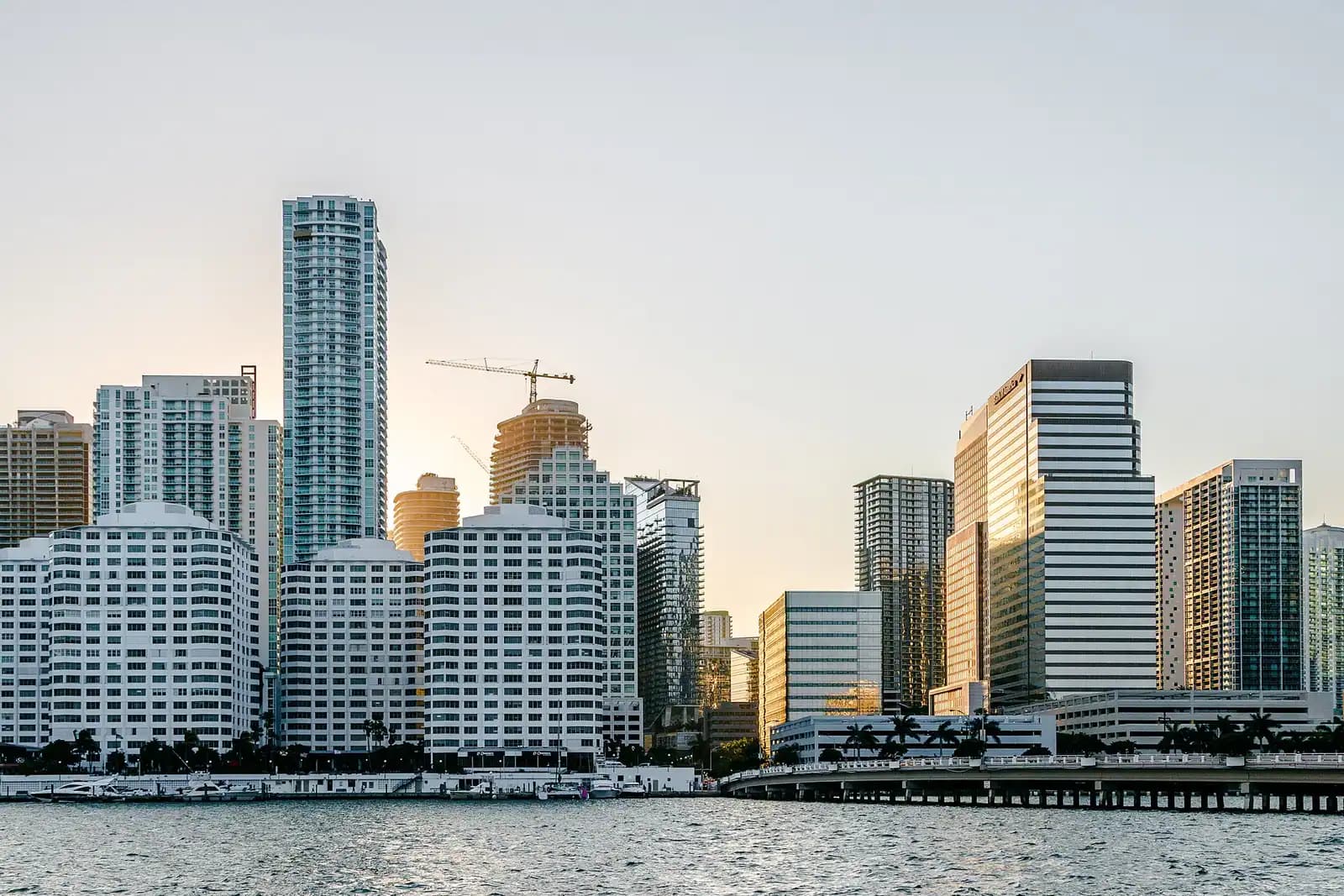
  • Glass residential towers rising above a tree-lined city street at dusk
    Free
    Neighbourhood

    Brickell

    The only part of Miami where the travel time between two things is four minutes on foot.

    1.5–4 hoursFree to walk, and the Metromover through it costs nothing. Food, drink and parking are the only expenses.

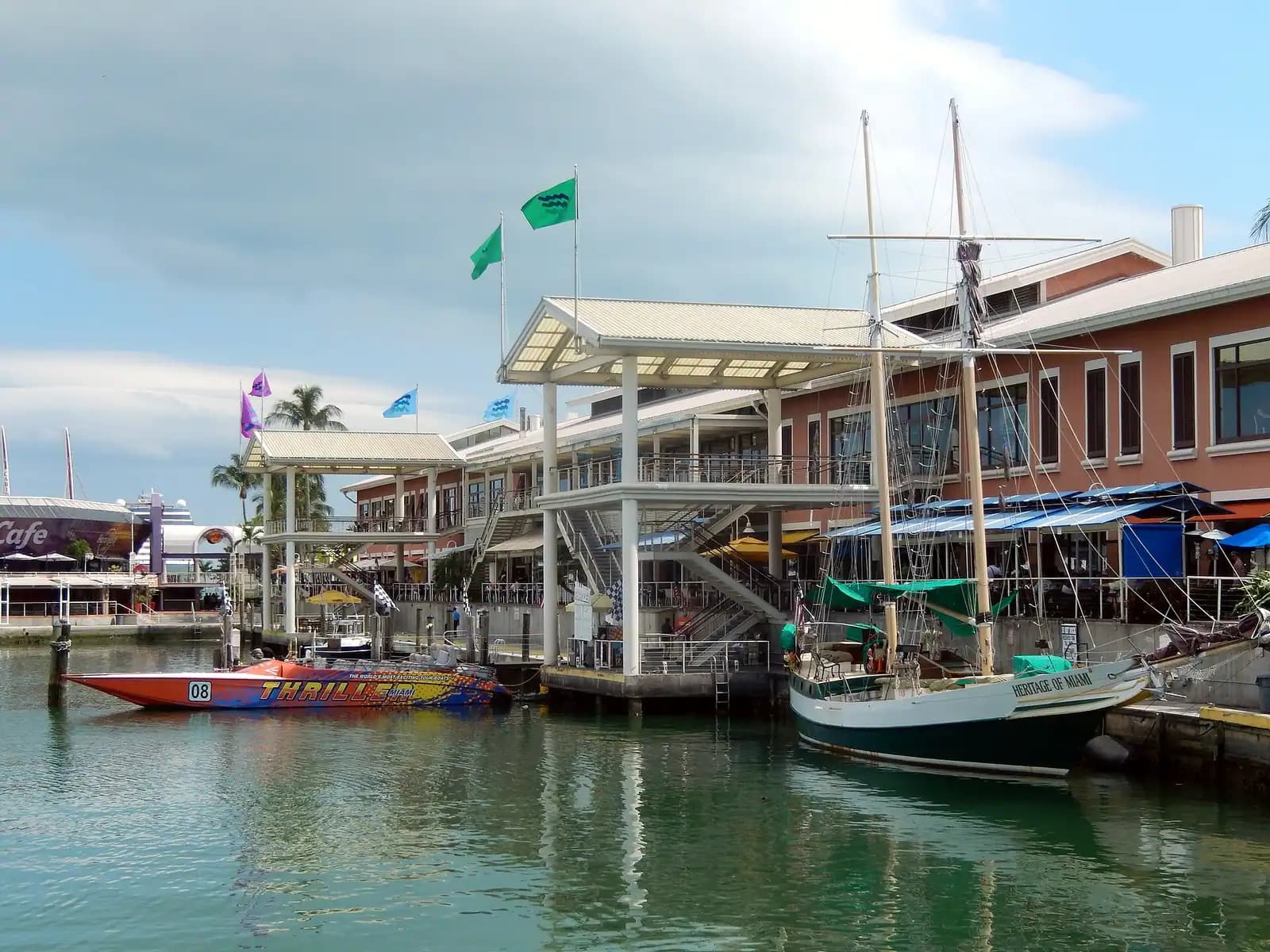
  • Pleasure boats moored in a downtown marina with office towers rising behind them
    Free
    Shopping

    Bayside Marketplace

    Where your boat leaves from. Arrive thirty minutes early, and know exactly what to do with those thirty minutes.

    1–2.5 hoursFree to enter and walk. Bay cruises, speedboat rides and the observation wheel are each ticketed separately by their operators.

Straight answers

Questions people actually ask

Do you need a car in Miami?

Not for most days, and a car is an active liability in South Beach, Wynwood and Brickell, where parking runs around $4 an hour at a meter or $20 to $30 for a garage day and hotels charge nightly on top. The workable pattern is rideshare between mainland neighbourhoods, the free Metromover inside downtown and Brickell, and the free trolleys on the island. Hire for the two days that leave the city.

Is the Metromover free in Miami?

Yes. No ticket, no tap, no barrier. Three loops and 21 stations covering downtown, the Omni and Brickell, elevated a storey above the street, air-conditioned, and roughly every ninety seconds at peak. It reaches the downtown rail station, the bayfront market and the waterfront museum park. It does not cross Biscayne Bay and does not reach Wynwood. Service hours have been trimmed in past years, so check before planning a late return.

How do you get from Miami to Miami Beach?

By causeway, because no rail line crosses. The MacArthur runs from downtown to Fifth Street in South Beach, the Julia Tuttle from the Wynwood side to 41st Street in Mid-Beach, the Venetian across the small islands with a toll and a separated cycle path, and the 79th Street causeway further north. Twelve to fifteen minutes mid-morning, forty to fifty at six on a Friday, with rideshare surge on top.

How long does it take to get from Miami airport to South Beach?

Roughly 30 to 45 minutes door to door depending on the hour, for eight miles as the crow flies plus a causeway. Add a third between four and seven in the evening. The detail that catches people is that hire cars and the trains are at the Miami Intermodal Center rather than the terminal, reached by a free Skytrain that takes a real fifteen minutes each way. Airport taxis are metered with an origination charge.

Is Uber expensive in Miami?

It is reasonable most of the time and expensive at hours you can predict: airport arrival banks, the two hours either side of six on any causeway, closing time in the entertainment district, when a downtown event empties, and across Art Basel week. Because taxis here are metered rather than algorithmic, they are frequently the cheaper option at exactly those moments. Plan the ride home before you go out.

Can you get around Miami without a car?

Yes, easily, if you pick a side of the bay. On Miami Beach, five free trolley routes published 8am to 11pm cover the whole island and everything else is walkable. On the mainland, the free Metromover covers downtown, the Omni and Brickell, and short rideshare hops reach Wynwood, the Design District, Little Havana and the Grove. The only days that genuinely need a car are the ones that leave the city.

How much is parking in Miami Beach?

Around $4 an hour at a South Beach meter and roughly $20 to $30 for a day in a municipal garage, with hotels charging a nightly rate on top of the room and valet running $30 to $50 in the entertainment district. Street meters are paid by app, and Miami and Miami Beach use different operators, so download both before you need either. Verify current rates before relying on these bands.

Are there tolls in Miami and how do rental cars handle them?

The expressways are cashless, with no booths — tolls are read from a transponder or photographed from the plate. Rental companies enrol you in a toll-by-plate programme that adds a daily administration fee, frequently charged for every day of the rental rather than every day you use a toll road, which is how a modest week of tolls becomes a much larger line on the invoice. Ask about the daily fee at the counter.