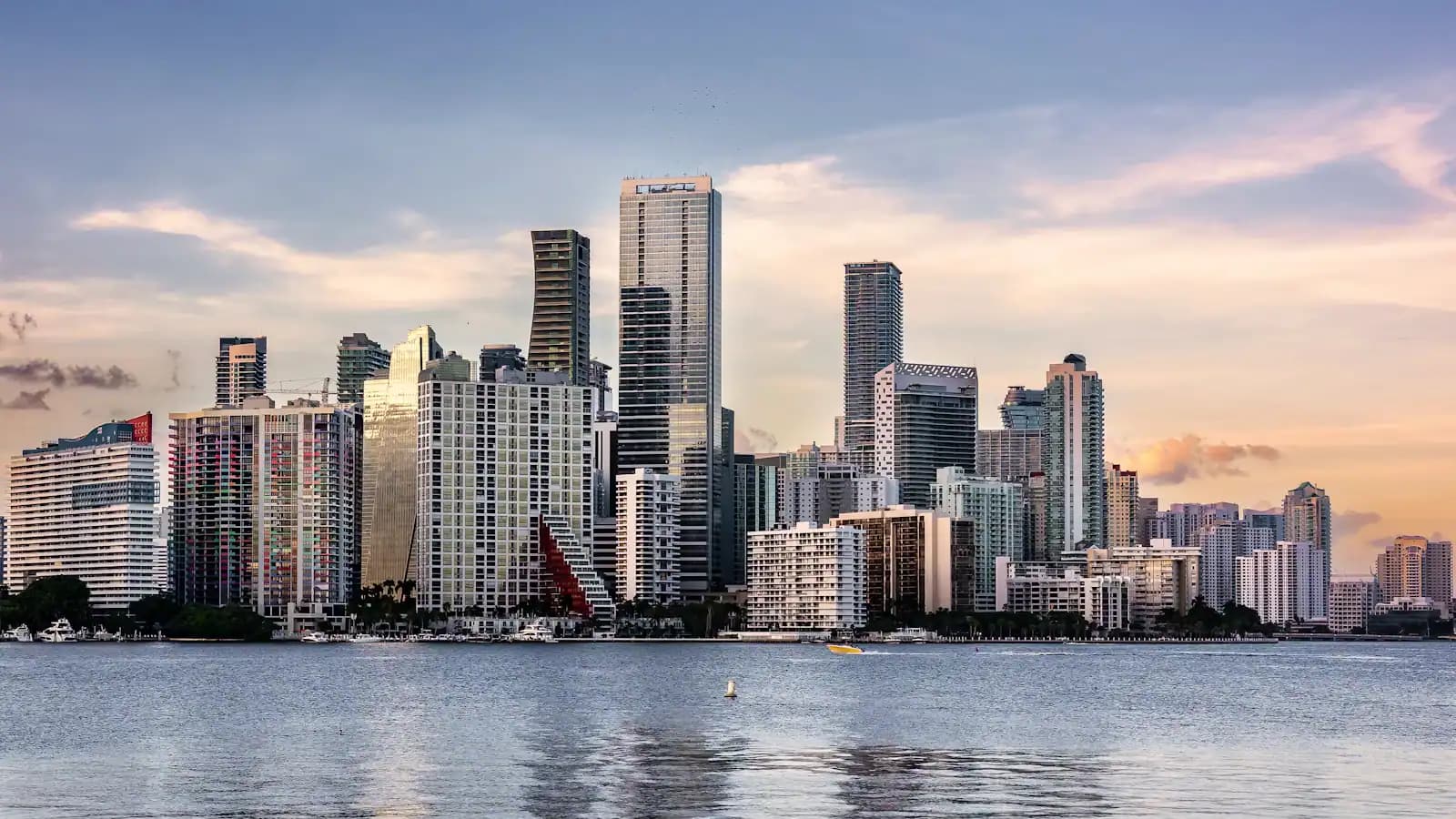
The mistake people make with a Miami layover is not choosing the wrong place to go. It is doing the arithmetic in the wrong order — picking a destination first and then discovering that the six hours on the boarding pass were never six hours.
So start with the subtraction. Everything else on this page depends on it.
What a layover is worth, after the airport takes its share
| Printed layover | Airport takes | Yours, realistically | What that buys |
|---|---|---|---|
| Under 3 hours | All of it | Nothing | Stay airside. This is not a decision, it is arithmetic |
| 4 hours | 2h 30m–3h | 1–1h 30m | A meal outside the terminal at most. Rarely worth it |
| 5 hours | 3h | About 2 hours | Little Havana or a downtown loop, if you are domestic and bagless |
| 6–7 hours | 3h–3h 30m | 3–4 hours | Wynwood, Calle Ocho or downtown properly. One neighbourhood, not two |
| 8–10 hours | 3h 30m | 5–6 hours | The beach, comfortably. Or a short bay cruise and lunch |
| Overnight | 4 hours | A night and a morning | A hotel room beats an airport bench by a wide margin here |
The "airport takes" column is where people are optimistic. It contains: the walk from your arrival gate, the wait if you have to collect a bag, the ride out, the ride back, the queue to re-clear security on return, and the buffer you must hold before boarding. None of it is optional and all of it is variable.
Two rules that make the table conservative rather than pessimistic. If your onward flight is international, add thirty minutes to the return side. If you are arriving internationally into Miami, you have already spent immigration, baggage claim, customs and a recheck before your layover clock even feels like it has started — count that hour before you count anything else.
Getting out of MIA without renting a car
You do not need a car, and on a layover you actively do not want one. The rental counters are a separate journey in themselves.
The free part. An automated people mover connects the terminal to the Miami Intermodal Center, the transport hub immediately east of the airport. It is free, runs around the clock at roughly four-minute headways, and takes a few minutes. Everything below starts there.
To downtown and Brickell. Metrorail's Orange Line runs from the airport station at that hub straight into the city, stopping at Government Center and Brickell. The published single-ride fare is $2.25, paid by transit card, ticket, the county's app or contactless. From Government Center you step onto the free Metromover, which covers downtown, the Omni and Brickell across 21 stations with no ticket at all. Allow around half an hour each way for the rail leg, plus the people mover.
To Miami Beach. Metrobus route 150, the Miami Beach Airport Express, runs from the airport across the bay to the island for the same $2.25. Published headways are roughly every thirty minutes, with service from about six in the morning until late evening, and the trip takes forty-five to sixty minutes depending on traffic. It is genuinely cheap and genuinely slow. On a tight layover, pay for a car instead.
By road. MIA to South Beach is about twelve miles and runs thirty minutes in light traffic, forty-five and upwards in the evening peak. MIA to Wynwood or downtown is nearer fifteen to twenty minutes off-peak. Those numbers are the reason the table above is shaped the way it is.
What each block of free time actually reaches
Two hours. Do not cross the bay. Go to Calle Ocho in Little Havana, which is the closest genuinely distinctive neighbourhood to the airport, walk two or three blocks of it, drink a colada standing at a window, and come back. Or stay closer still and eat somewhere in the airport's own western neighbourhoods, which is a better meal than the terminal at a fraction of the price.
Three to four hours. Downtown and Brickell on the free Metromover, which is the single best thing to do on a Miami layover that nobody does: it is elevated, air-conditioned, costs nothing, and gives you the bay, the river mouth and the towers in about forty minutes of riding. Or Wynwood's painted blocks, which are free, outdoors and take as long as you let them.
Five to six hours. The beach becomes reasonable. Take a car out, take the sand and a walk along the Deco blocks, eat two streets back from the ocean front, and take a car back with a hard departure time set on your phone. Or stay on the mainland and put a ninety-minute bay cruise in the middle of it, which is the most Miami thing you can do in a fixed window and leaves from the downtown waterfront.
Overnight. Sleep in a bed. Airport hotels here are ordinary and adequate, and a room plus a morning in the city beats a night in a terminal by an enormous margin. If your onward flight is early, stay near the airport rather than on the island — the causeway at seven in the morning is not a risk worth taking for a nicer room.
When staying airside is the right answer
It is the right answer more often than travel articles admit, and there is no shame in it.
Stay inside if the layover is under four hours. Stay inside if you have checked bags you cannot leave anywhere. Stay inside if your onward flight is the last of the day to somewhere you must be. Stay inside in the two hours either side of six in the evening, when every road out of that airport is at its worst. And stay inside if the alternative is a frantic ninety minutes in a neighbourhood you will not remember.
MIA is a large, busy airport with plenty of genuinely good Cuban coffee and food inside it. A colada and an hour with a book is not a failed layover.
The bag problem, which decides most layovers
Whether you can leave the terminal usually comes down to what is attached to you.
If your bags are checked through to your final destination, you are free. This is the good case and it is common on a single-ticket itinerary.
If you are on separate tickets, you will collect your bags and re-check them, which means you must return in time for that airline's own check-in cut-off rather than just the boarding time. Subtract another hour.
If you are carrying everything, you can still leave, but dragging a cabin bag around Wynwood in August is its own punishment.
Miami International has a staffed baggage-storage counter run by a third party on the pre-security side of the terminal rather than self-service lockers, and there are commercial storage points around the city as well. Do not assume it is open when you land: check the current hours and location before you build a plan on it, because an overnight or early-morning arrival can easily fall outside them.
One more piece of arithmetic people forget. If you leave, you re-clear security on the way back in, in the general queue, at whatever time of day you return. Airport security here is not a fixed cost — it is a variable one, and it varies most in the morning bank and the early evening.
The Fort Lauderdale wrinkle
A lot of Miami trips do not begin at MIA at all, and a lot of layover questions are really about the wrong airport.
Fort Lauderdale sits roughly thirty miles north. Driving between the two is thirty to fifty minutes in decent conditions and over an hour in the evening peak on I-95. Two rail options connect them: Brightline runs between downtown stations in about thirty-five minutes, with a free shuttle at the Fort Lauderdale end, and Tri-Rail runs between the two airports' own stations in around an hour for a few dollars.
What that means practically. If you are choosing flights, a cheaper fare into Fort Lauderdale is often genuinely worth taking, especially if you are staying in Miami Beach's northern half or heading for the Everglades. If you have a long layover at FLL rather than MIA, the honest answer is that Miami is too far to be a layover destination — go into Fort Lauderdale itself instead.
And if you are connecting between the two airports on separate tickets, do not do it on a tight margin. Two airports, a rail leg and a shuttle is four points of failure in a chain you cannot rebook.
Last updated
Opening hours, ordinances and prices move with the season. We re-check this guide rather than rewrite it, and the date above is the last time someone did. How we research and correct.