Skip to content
Search
Menu

We earn a commission if you book through this link. You pay the same price.

Everything

Sunset in Miami Happens Over the Bay, Not the Ocean

Last updated

Sunset in Miami happens over Biscayne Bay behind the mainland skyline, not over the ocean. Where to stand, the real time by month, and the crossing to avoid.

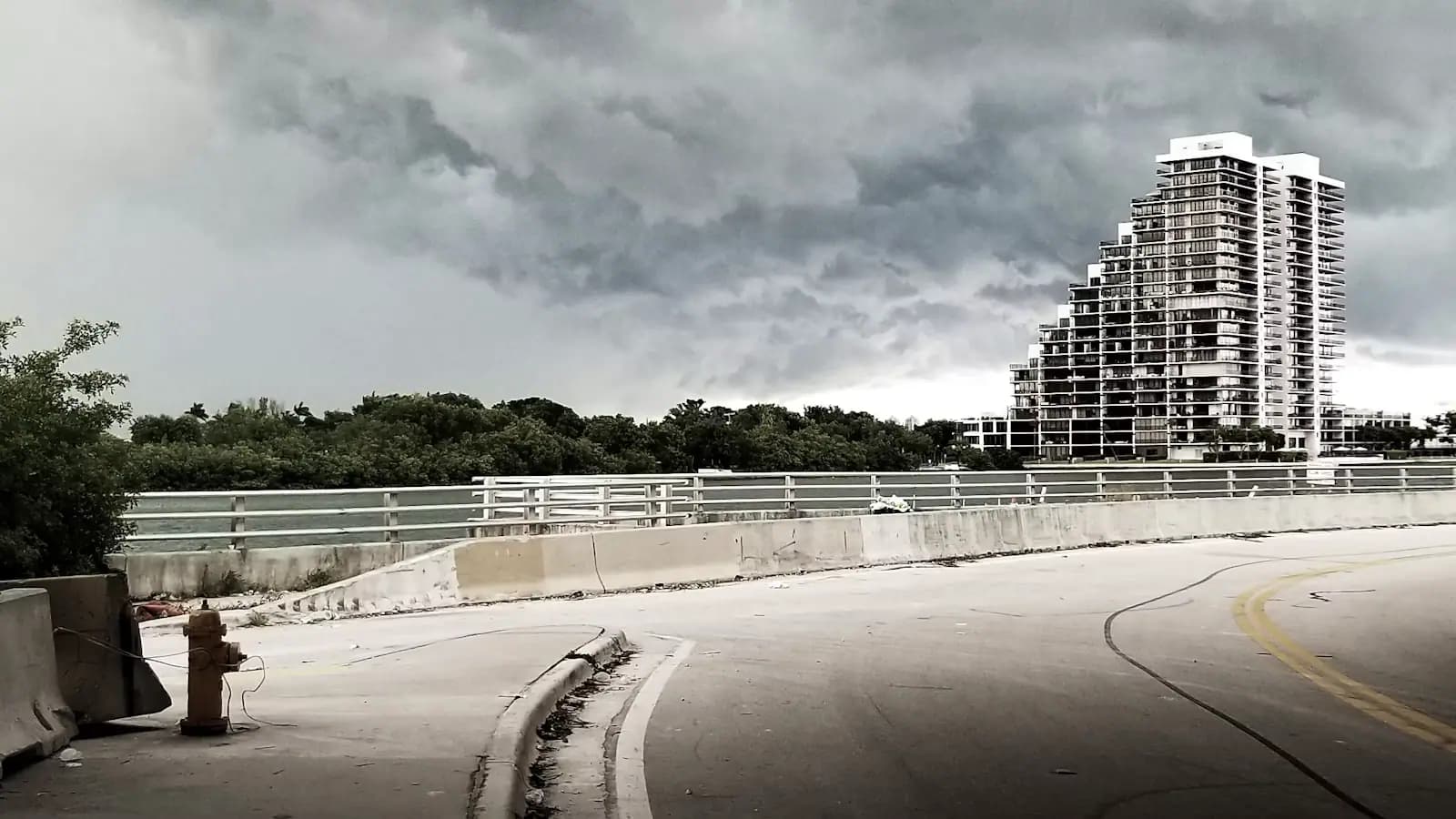
A public fishing pier running out over the water with a city skyline behind it at duskUnsplash

The most commonly wasted hour of a Miami trip is the hour before dinner, and it is wasted for a single geographical reason that nobody mentions at check-in. Miami Beach is a barrier island facing east. The Atlantic is on its ocean side and gets the sunrise. The sun sets on the other side, over Biscayne Bay, behind the mainland skyline. So the crowd standing on Ocean Drive at seven waiting for a sunset is standing with its back to it, and will get a pleasant pink sky and none of the event.

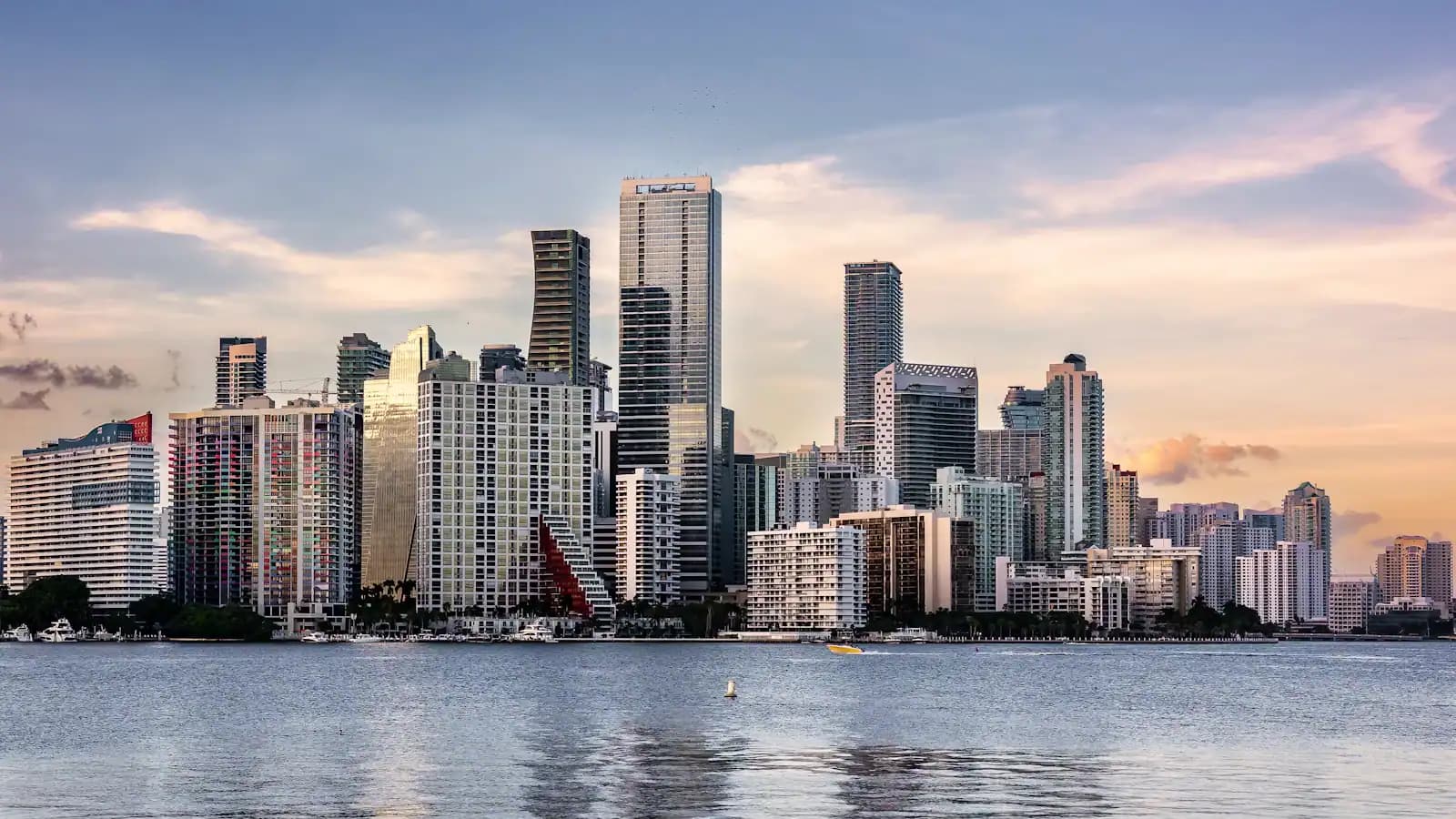
That single fact reorganises the whole evening. It means the best sunset in this city is not on a beach at all — it is from the islands looking back west at the mainland, with the towers of Brickell and downtown turning black against the light and the bay going flat and metallic in front of them. It means the two causeways with pedestrian access are among the best free viewpoints in the county. It means that on the mainland you are standing inside the thing that makes the view, which is why the mainland bayfront is better for the twenty-five minutes after sunset, when the towers light up, than for sunset itself.

The second thing this page exists to fix is the clock. Sunset in Miami moves nearly three hours across the year, from around half past five in very late November to about a quarter past eight at the start of July, and the two daylight-saving switches move it by a full hour overnight. That matters commercially as well as aesthetically: this market sells a great many "sunset cruises", and a six o'clock sailing is a genuine sunset trip in December and an early evening cruise in June. Check the sailing time against the actual sunset for your date before you book, not after.

Third, sunset has a traffic consequence here that it does not have in most cities. The hour either side of six is the worst weekday window on the causeways in both directions, and if you are driving west across the bay at that moment you are doing it into the commuter flow and directly into the glare. A sunset plan that requires crossing the bay at six is not a sunset plan, it is an hour on a bridge with a good view of the car in front.

What follows is where to stand depending on which side of the water you are already on, the real time by month, the twenty-five minutes most people leave before, how to book a sunset departure without getting the hour wrong, and how to put sunset and dinner in the right order.

What time sunset actually is, month by month

When to go

Approximate and rounded. Check the exact time for your date, because the difference between the start and the end of a month here can be twenty minutes.

MonthRoughlyWhat it does to the evening
January5:40 – 6:00pmSunset before dinner, easily. The whole evening is still ahead of you
February6:00 – 6:20pmThe same, with warmer light
Early MarchAbout 6:25pmThen the clocks go forward on the second Sunday and it jumps an hour
Late MarchAbout 7:30pmSunset and dinner start competing for the same hour
April7:40 – 7:55pmGolden hour becomes an aperitif rather than an outing
May7:55 – 8:10pmLong light. Anything outdoors is comfortable again by seven
June8:10 – 8:17pmThe latest sunsets of the year
July8:17 – 8:05pmPeaks at the start of the month and starts pulling back
August8:00 – 7:40pmStorm clouds clearing at seven produce the year's best skies
September7:35 – 7:10pmLosing about twenty-five minutes across the month
October7:05 – 6:45pmEvenings shorten fast
Early NovemberAbout 6:40pmThen the clocks go back on the first Sunday and it drops an hour
Late Nov – December5:30 – 5:40pmThe earliest sunsets of the year, in very late November

The two dates that catch people out are the daylight-saving switches: the second Sunday in March and the first Sunday in November. Both move sunset by a full hour overnight, and both fall in months when visitors are booking evening departures from a schedule they read last week.

The August line is not a consolation. A summer storm that clears around seven leaves behind torn, lit cloud and the best colour of the year. If your evening survives the storm hour, the reward is real.

The planning consequence of that table is that sunset is a different sort of event in winter and in summer here. From November to February it is an afternoon activity with a whole evening behind it, which is why a five o'clock departure works. From May to August it is the last thing that happens before dinner, which is why it competes with the table rather than preceding it.

The twenty-five minutes after sunset are the good ones

Local tips

Almost everybody leaves at the wrong moment, and it is a specifically Miami mistake because of what is on the horizon.

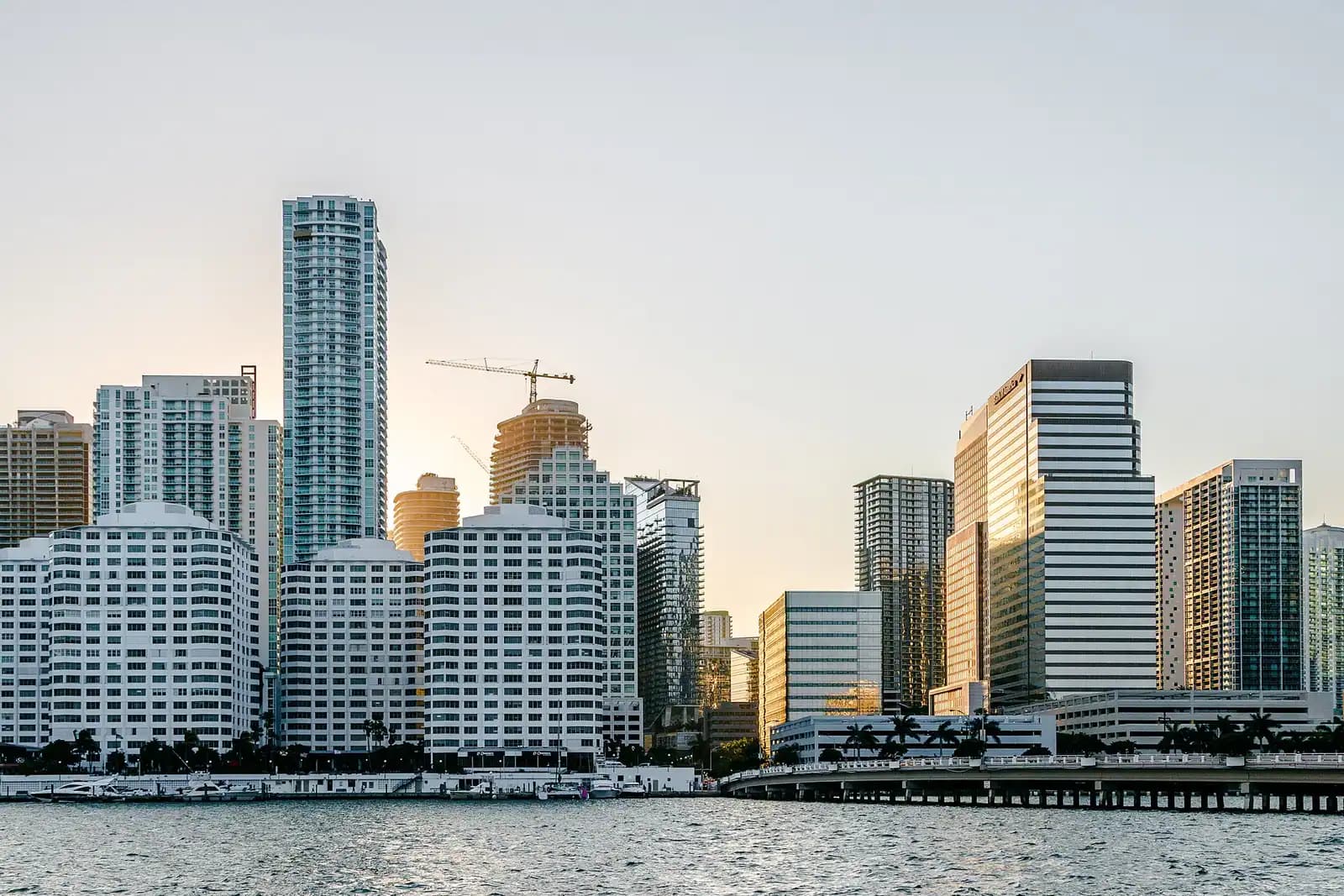
When the sun goes down behind the mainland, the sky keeps working for another twenty to thirty minutes — and at the same time the thing you are looking at starts to light up. Downtown and Brickell carry a great deal of illuminated glass, and the county's bridges and public buildings are lit as well. So the composition improves after sunset rather than fading: a dark skyline against a live sky, doubled in flat bay water. Photographers call the window blue hour. Here it is the main event.

Three practical consequences.

Do not book a sunset cruise that turns for home at the moment of sunset. Look for a departure that is still out on the water twenty minutes afterwards. The difference is the difference between the trip and the photograph of the trip.

On the causeways and in the bay parks, stay put. The crowd thins out within five minutes of the sun disappearing and the best quarter of an hour happens to an almost empty viewpoint.

Plan for the walk back in the dark. Several park gates close at or around sunset, causeway paths are unlit in stretches, and the free trolleys on the island run into the evening but at fifteen to twenty minute headways rather than continuously. None of that is a problem if you have thought about it; all of it is a problem at half past eight in a bay park with a flat phone.

One more: the mosquitoes come out at dusk from roughly May to October, and the bay parks and mangrove edges are exactly where they live. Repellent turns a good twenty-five minutes into a comfortable one.

Booking a sunset departure without getting the hour wrong

What it costs

This market carries a great deal of evening inventory and the listings are looser about the word sunset than they should be. Bands, and verify before booking.

  • Check the sailing time against the real sunset for your date. A 6pm departure is a sunset trip in January and a late-afternoon cruise in June. Operators very rarely adjust their published times as quickly as the sun moves.
  • Look for a return time at least twenty minutes after sunset, so the blue hour happens while you are still on the water rather than in the car park.
  • Short beats long. The sweet spot for a bay sunset is 90 minutes to two hours. Longer trips tend to add a stretch in the dark that adds nothing to the view and quite a lot to the price.
  • Which side of the bay it sails from matters more than the vessel. A departure from your own side keeps the evening inside two hours; one that requires a causeway crossing at six has quietly added the worst hour of the day to a trip you booked for the light.
  • Price bands. This market has well over a thousand bookable products at a median around $89. Shared sunset sailings and bay cruises sit below that median; private charters and dinner cruises sit above it, and the tail past $250 is charter territory.
  • What the free version costs. Nothing at all, on the Venetian Causeway, in the bay parks, or from any mainland rooftop with a drink in your hand — which is the other Miami sunset economy, and the drink is the ticket price.

Sequencing sunset and dinner

When to go

Getting the order right is worth more than getting the venue right, and the correct order changes with the month.

SeasonSunsetThe sequence that works
December to February5:30 – 6:20pmSunset first at five thirty, a drink after, dinner at eight. The evening is long
Late March to May7:30 – 8:10pmDrink at six thirty, sunset at half seven or eight, dinner at nine. Book the late table
June to August7:40 – 8:17pmThe storm clears around six. Sunset is late, so dinner is late. Nothing outdoors before six is comfortable anyway
September to mid-November6:40 – 7:35pmThe best-balanced evenings of the year: sunset at seven, table at eight thirty, still warm

The winter trap is treating a five-thirty sunset as the end of the day. It is not; it is the start of a five-hour evening, and the hours after it are the most pleasant of a winter trip.

The summer trap is the opposite: booking a seven o'clock table in June and missing sunset entirely because you are already sitting down. Eat later. The city does.

The universal rule. Fix the sunset location first, then pick a restaurant within walking distance of it. Reversing that puts a causeway or a car park between you and the only part of the evening that cannot be rescheduled.

Book it

What you can book

We could not find tours matching this right now

Nothing came back for Miami sunset cruise. Operators add and retire experiences constantly, so this list changes week to week. Try a broader category, or come back in a day or two.

Which way to face, and why it depends where you are

How they compare

The rule: the sun goes down in the west, the mainland is west of the bay, and the best views look back at it.

If you are onFaceWhat you getNote
Miami Beach, bay sideWestThe sun going down behind the downtown and Brickell towers. The classic versionSunset Harbour, the bay parks, the west end of South Pointe
Miami Beach, ocean sideEastAn afterglow on the water behind you and pink on the deco buildingsGood, and not a sunset. Do not plan an evening around it
The Venetian CausewayWestOpen water on both sides, a separated path, and the skyline dead aheadThe best free viewpoint in the county, on foot or by bike
The Rickenbacker Causeway and Virginia KeyNorthwestThe whole skyline across open water, with kite surfers in the foregroundTolled to get there; it is the island's only road
Downtown and Brickell bayfrontEastThe afterglow and the towers lighting up around youYou are standing inside the view, which is better after sunset than at it
Coconut Grove and the southern bayfrontEastSailing masts, calm water, the colour on the far shoreQuieter, greener, and a shorter walk to dinner
A Brickell rooftopWestThe actual sun, going down over the Everglades beyond the cityThe one mainland option that faces the right way

The single best free option if you have a bike or an hour to walk is the Venetian Causeway, which hops a chain of small residential islands on a separated path with water either side. It costs nothing on foot, it puts you above the bay rather than beside it, and it faces exactly the right way.

A warning about parks. Several county and state park gates close at or shortly after sunset, which is precisely when you want to be inside one. Check the gate time before you drive in, not after you have parked.

Sunset traffic: the one crossing not to make

Before you book

The hour either side of six is the worst weekday window on the causeways in both directions, and sunset falls inside it for roughly half the year.

Westbound at sunset is the bad one. You are travelling into the commuter flow towards the mainland and directly into the glare, on a road with drawbridge sections and no alternative. The MacArthur runs twelve to fifteen minutes mid-morning and forty to fifty in that window, with rideshare surge stacked on top.

So: book your sunset on the side you are already on. This is one of the few pieces of advice on this site that costs nothing to follow. Every side of the bay has a good option, and the table further up this page says which direction to face from each.

If you must cross for dinner, cross after eight, once the light has gone and the peak with it. Sunset first, then the crossing, then the table — never the other way round.

On the island specifically, the free trolleys are the sensible way to reach the bay side at six: fifteen to twenty minute headways, no parking to find, and no surge. On the mainland, the free Metromover puts you on the downtown waterfront without a car at all.

One weekend note. On a Sunday afternoon the reverse flow builds from about three as day-trippers return, and the beach car parks empty into the same two causeways at once. A Sunday sunset is best planned from wherever you already are, with no driving in it at all.
On the ground

Where to go

Every place below has its own page — hours, parking, what it costs and what to expect when you get there.

  • A wide sandy beach with rows of parasols and a line of low buildings set well back from the water
    Free
    Beach

    South Beach

    Budget three hours minimum, because the sand is only half of it — the causeway takes the rest of your afternoon.

    2–6 hoursThe beach itself is free. Parking is not, and loungers and umbrellas from the hotel concessions are rented by the day.

  • An empty stretch of pale sand meeting calm shallow water under a clear sky
    Beach

    Key Biscayne

    Fifteen minutes from Brickell over a tolled causeway — closer than the beach everyone books, and a completely different kind of day.

    4–6 hoursThe causeway toll is a small electronic charge per crossing, and each beach park charges a separate per-vehicle entry fee at the gate. The island's roads and village are free to drive through.

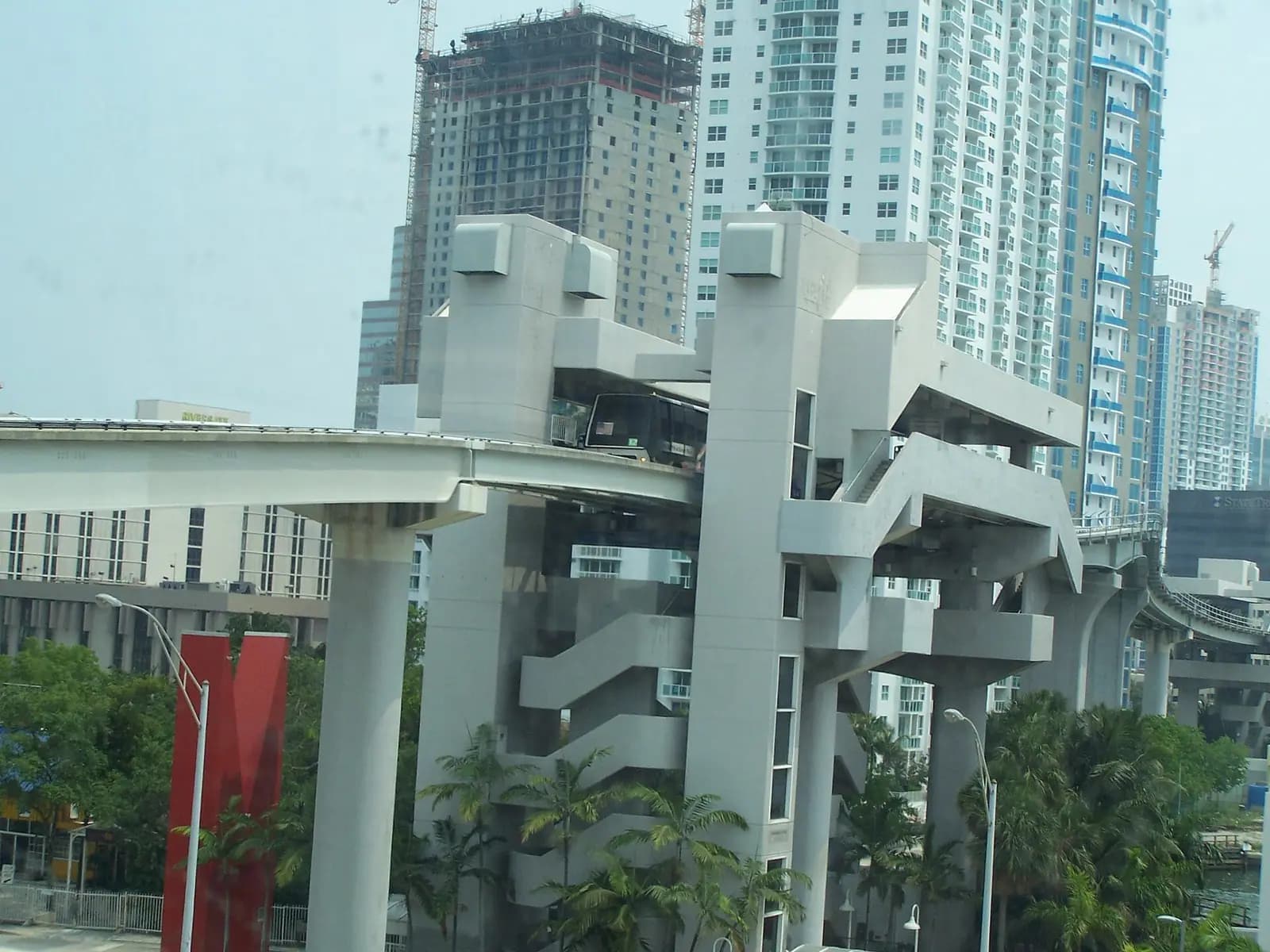
  • The elevated Riverwalk Metromover station and its concrete guideway between downtown Miami towers
    Free
    Landmark

    Metromover

    Thirty free minutes with a skyline view, and the only reliable dry seat in downtown Miami when a storm arrives.

    0.5–1 hoursCompletely free. There is no ticket, no tap and no gate on any of the 21 stations or three loops.

  • A residential street shaded by a continuous canopy of mature trees
    Free
    Neighbourhood

    Coconut Grove

    The one Miami neighbourhood with a real tree canopy, which makes it the only outdoor block that works at two in the afternoon.

    2–4 hoursFree to walk, and the marina walk, parks and canopy streets cost nothing. Food, drink and parking are the only expenses.

  • Glass residential towers rising above a tree-lined city street at dusk
    Free
    Neighbourhood

    Brickell

    The only part of Miami where the travel time between two things is four minutes on foot.

    1.5–4 hoursFree to walk, and the Metromover through it costs nothing. Food, drink and parking are the only expenses.

  • A pedestrianised shopping street with cafe tables set out beneath trees and awnings
    Free
    Shopping

    Lincoln Road

    Eight pedestrian blocks, ten minutes from the sand, and the only reliable cover on the island when the sky opens.

    1–3 hoursFree to walk, and the free outdoor programming at the eastern end costs nothing when it is running. Food, shopping and parking are the only expenses.

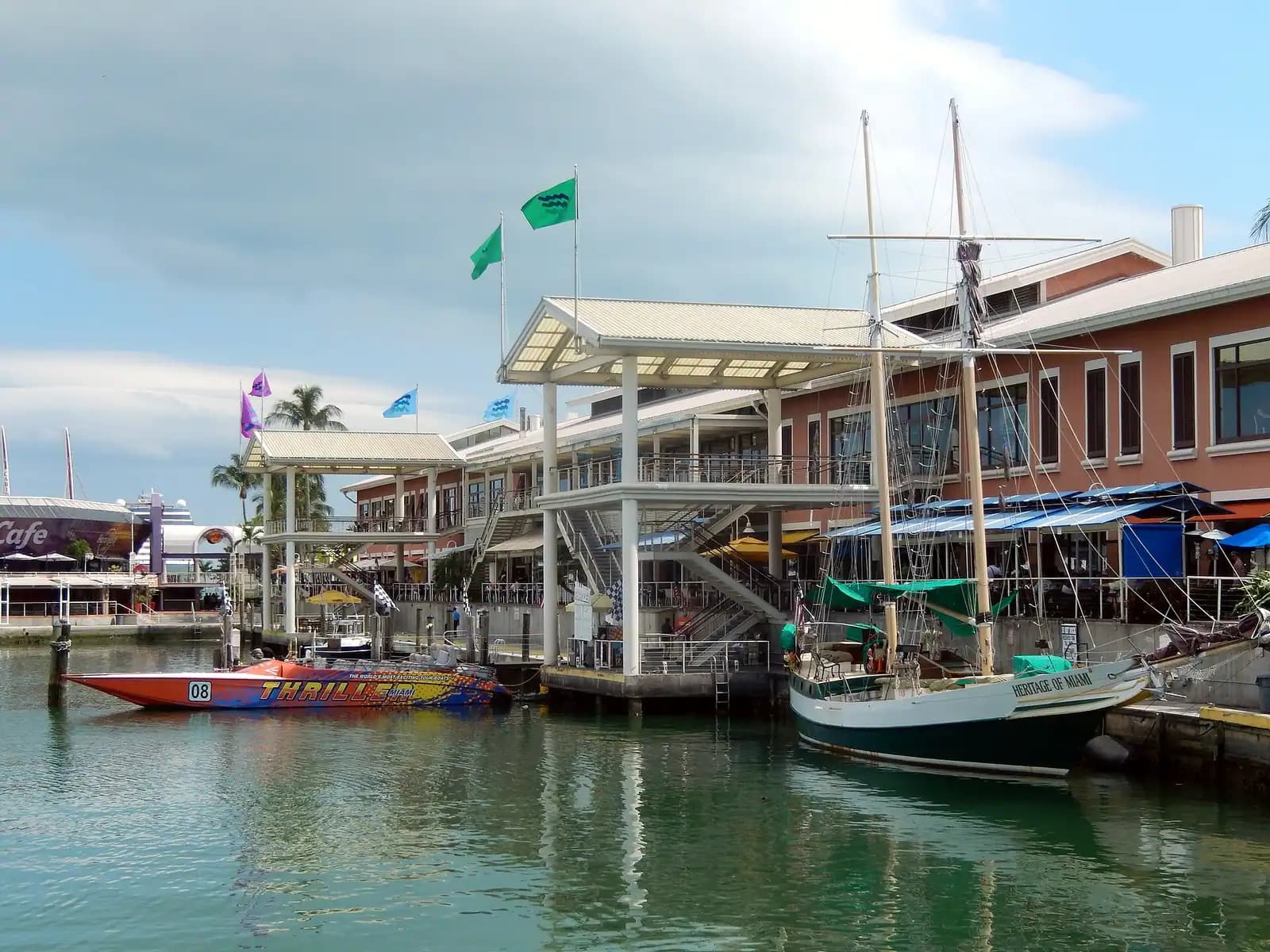
  • Pleasure boats moored in a downtown marina with office towers rising behind them
    Free
    Shopping

    Bayside Marketplace

    Where your boat leaves from. Arrive thirty minutes early, and know exactly what to do with those thirty minutes.

    1–2.5 hoursFree to enter and walk. Bay cruises, speedboat rides and the observation wheel are each ticketed separately by their operators.

Straight answers

Questions people actually ask

Where can you watch the sunset in Miami?

From the bay side, looking west at the mainland. The strongest free viewpoints are the Venetian Causeway on foot or by bike, the bay parks on the western edge of Miami Beach, and the Rickenbacker Causeway and Virginia Key, which give you the whole skyline across open water. On the mainland you are standing inside the view, so downtown and Coconut Grove are better for the afterglow than for the sun itself.

Does the sun set over the ocean in Miami?

No, and this is the single most common orientation mistake visitors make here. Miami Beach is a barrier island facing east: the Atlantic gets the sunrise and the sun sets behind the mainland skyline over Biscayne Bay. Standing on Ocean Drive at seven means standing with your back to the sunset. Walk fifteen minutes west across the island and the whole thing is in front of you.

What time does the sun set in Miami?

It moves nearly three hours across the year: around 5:30pm in very late November and about a quarter past eight at the start of July. The two abrupt changes are the daylight-saving switches on the second Sunday in March and the first Sunday in November, which each move sunset by a full hour overnight. Check the exact time for your date before booking anything described as a sunset departure.

Are Miami sunset cruises worth it?

Yes, provided you book the hour rather than the label. A 90-minute to two-hour bay departure that is still on the water twenty minutes after sunset gives you the part that matters, which is the skyline lighting up against a live sky. What is not worth it is a fixed-schedule sailing that returns at the moment the sun goes down, or a long dinner cruise whose extra hour happens in the dark.

How long after sunset should you stay?

About twenty-five minutes, and almost nobody does. Downtown and Brickell carry a lot of illuminated glass, and the bridges and public buildings are lit as well, so the view improves after the sun has gone: a dark skyline against a colouring sky, doubled in flat water. The crowd thins within five minutes of sunset, which means the best quarter of an hour happens at a nearly empty viewpoint.

Should you drive across the causeway at sunset in Miami?

Not westbound. The hour either side of six is the worst weekday window on the causeways in both directions, and heading west means driving into both the commuter flow and the glare, on a road with drawbridge sections and no alternative. Book your sunset on the side of the bay you are already on, and if you have to cross for dinner, cross after eight when the light and the peak have both gone.

What time should you have dinner in Miami?

Later than you would at home, and later still in summer. From December to February a five-thirty sunset leaves a five-hour evening, so an eight o'clock table is comfortable. From June to August the sun sets past seven forty, which means a seven o'clock reservation has you sitting down through the best light of the day. Fix the sunset spot first, then book somewhere within walking distance of it.