Miami City Tours – 5 Sites, 4 Stops, One Tour – 3.5 Hours of Fun (opens in a new tab)
This is Miami’s only semi-private hop-on hop-off city tour with just 14 guests max per bus—designed for comfort, culture, and VIP…
3–4 hours
Prices checked
Shopping
Last updated
Eight pedestrian blocks, ten minutes from the sand, and the only reliable cover on the island when the sky opens.
Photo: Phillip PessarCC BY 2.0
Every itinerary needs a block that requires no decision. On Miami Beach, this is it.
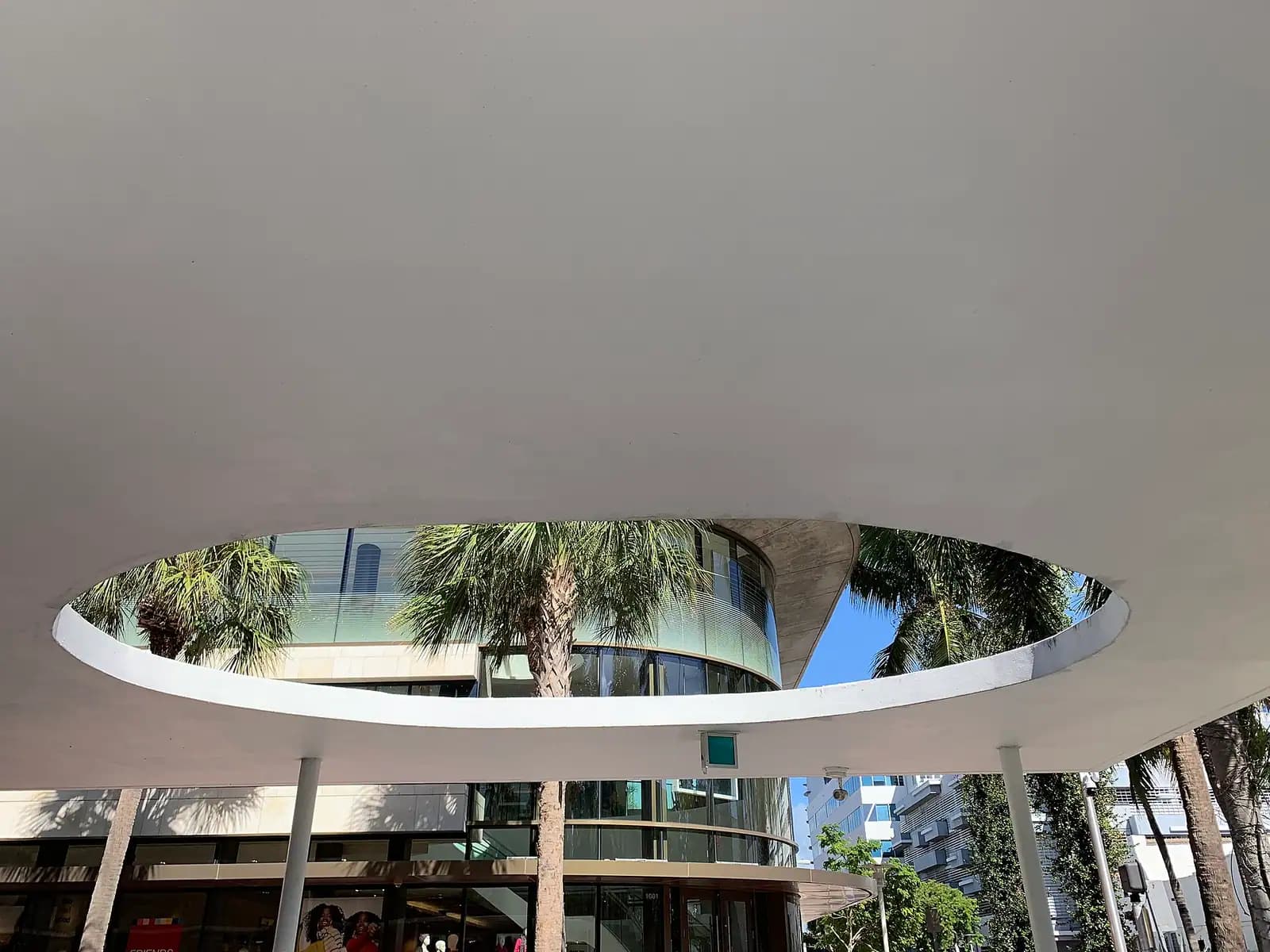
Lincoln Road is a pedestrianised street running roughly eight blocks across the island, from Washington Avenue at the ocean end to Alton Road on the bay side. It is closed to cars. It has shade structures, planting and awnings, most of which date from Morris Lapidus's redesign in the 1960s, and it is a ten-minute walk from the sand. Nothing here needs booking, nothing here has an opening slot, and there is no version of a day where it is unavailable.
That makes it the island's utility block, and it does three jobs.
The first is the back half of a beach morning. You leave the sand at eleven, you are showered and inland by half past, and the covered stretches here take you through to lunch without asking anything of you.
The second is weather. Miami Beach summer storms are thirty to forty minute cells, not all-day rain, and an open beach has nowhere to stand. This street has awnings, arcades and enough air-conditioned doorways to absorb a cell comfortably. It is the only place on the island you can rely on for that.
The third is the free evening. The eastern end of the road opens onto a public lawn behind the concert hall, where outdoor programming has long been projected onto the building's exterior wall. Check the season's schedule, but when something is on it is genuinely free, genuinely good and requires no ticket at all.
One honest note on cost: the tables directly on the road are priced for people who will not come back. Walk one block north or south and the same meal drops noticeably.
Lincoln Road is in Miami Beach, a separate city from Miami across Biscayne Bay. The mall runs east–west across the island between Washington Avenue and Alton Road, and is closed to traffic.
On foot from anywhere in South Beach: about ten minutes from the sand, ten to fifteen from the deco blocks on Ocean Drive, five from Española Way.
Free trolleys. Miami Beach routes serve the area at roughly fifteen to twenty minute headways, published as running from about 8am to 11pm. No fare. They connect north through Mid-Beach and North Beach.
Driving means metered kerb parking or a municipal garage in the surrounding blocks, both app-paid and both busier at weekends.
From the mainland it is a causeway: twelve to fifteen minutes from downtown mid-morning, forty to fifty in the two hours either side of six on a weekday. No rail crosses the bay.
This is the default answer to four of the most common questions on this site, which is why it earns its place.
What it is not is a destination you cross the bay for. From the mainland it is a causeway trip that ends at a shopping street, and there are better reasons to make that crossing. This is a block for people already on the island.
The street runs east–west across a flat island with no natural shade, so where you walk matters more than it should.
Morning, until about eleven. Comfortable almost anywhere. The eastern blocks nearest the ocean catch the breeze, and the road is at its emptiest — this is the good hour for photographs of the architecture rather than of other people.
Midday to about three. Stay under the Lapidus shade structures and the awnings in the middle blocks. The eastern end towards the ocean is the most exposed stretch and is the one to skip in July.
Three to five. The storm hour in summer. This is when the covered sections pay for themselves.
After six. The whole road is comfortable, the tables fill and the street performers appear. This is the busiest and best-tempered part of the day.
One caution about the ends. The bay end at Alton Road and the ocean end at Washington are both quieter and both more exposed, and the walk between them with shopping in hand is longer than it looks on a map. Eight blocks in ninety-degree heat is a real distance.
This is a shopping street, which makes it an odd place to recommend as a budget block. But the free version is real and it is most of the value.
What does cost money: anything with a table directly on the road, and parking, which is metered or garage-priced throughout the neighbourhood.
Everything worth doing next is on foot, which is the point of an island day.
The sand is ten minutes east. The deco blocks along Ocean Drive and Washington Avenue are ten to fifteen minutes south-east, best early in the morning or after dark when the light does the work. Española Way is five minutes away and is a short, useful detour rather than a block in its own right.
West, at the bay end, the neighbourhood changes character entirely: quieter streets, marinas, and — the part most visitors miss — the only direction on this island where the sun actually sets over water. Miami Beach faces east. The Atlantic gets the sunrise. If you want a sunset, finish your walk at the Alton Road end rather than turning back towards the ocean.
For anything off the island, the free Miami Beach trolleys run north through Mid-Beach and North Beach at roughly fifteen to twenty minute headways, and cost nothing. For anything on the mainland, it is a causeway and a rideshare: twelve to fifteen minutes to downtown mid-morning, forty to fifty around six in the evening. Cross once, late, and in the direction you are sleeping.
Operators run these trips past Lincoln Road, or stop there as part of a longer route. We list what the booking data supports — not everything that mentions the name.
Some links below go to Viator, our booking partner. We earn a commission on bookings made through them — at no extra cost to you, and with no influence on what we recommend.
Straight-line distances, so allow more on the road — the island is long and has one main parkway.
Where this place fits into a day, and the pages that plan one.
Miami Beach. It is a pedestrianised street running across the island between Washington Avenue and Alton Road, in the South Beach neighbourhood. Miami Beach is a separate city from Miami, on a barrier island across Biscayne Bay, and the two are joined only by causeways. That matters because getting here from a mainland hotel is a road trip of twelve to fifty minutes depending on the hour.
Wait it out under the awnings and arcades, which is what makes this the island's most useful wet-hour block. Miami Beach storms in summer are usually thirty to forty minute cells rather than all-day rain, and an open beach offers nowhere to shelter. The covered middle blocks here, plus the air-conditioned doorways, absorb a cell comfortably. Order a coffee rather than calling a rideshare.
Fifteen to twenty minutes end to end at a brisk pace, but nobody walks it that way. Allow an hour to do it properly with a stop, ninety minutes with a meal. It is roughly eight blocks across the island, and in summer heat with shopping in hand that is a longer distance than the map implies — plan a turning point rather than committing to the full length.
Yes, more than you would expect from a shopping street. The walk itself is free and the Lapidus-era shade structures and planting make it a designed street rather than a strip. The public lawn at the eastern end has long hosted free outdoor programming projected onto the concert hall's exterior wall — check the current season. The Miami Beach trolleys serving the area also cost nothing.
One block off it. The tables directly on the road carry a location premium and are aimed at people who will not be back, while the blocks immediately north and south are where residents eat and prices drop noticeably. The same applies across South Beach generally: two streets back from any famous strip is consistently the better value for the same food.